

A Fashion CEO Talks Career Lessons, Advice & More
All products on this page have been selected by our editorial team, however we may make commission on some products.
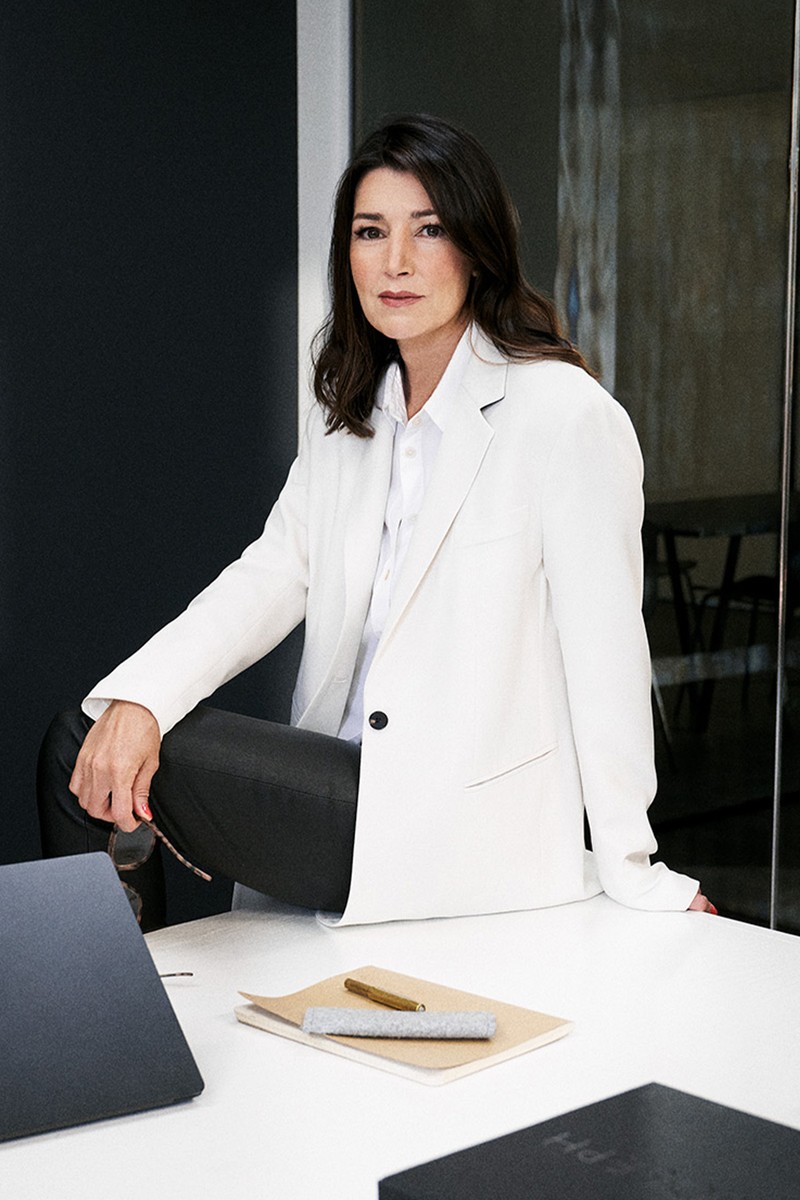
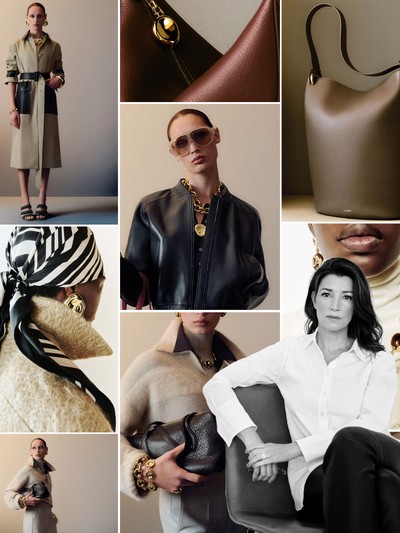
Over the course of my career, I've been lucky to work with different cultures, in different environments and countries. All of that experience feeds into my role today. From my early days at Hugo Boss – with the German structure and discipline – to my creative years at Furla with the can-do attitude of the Italians and DVF where the Americans believed nothing was impossible, all of that has led me to where I am today.
Fashion always felt like a natural path for me. I grew up in France, where dressing up is part of the culture, so I’ve always been drawn to clothes. My mother also loved magazines – our coffee table at home was full of them – and my grandmother loved department stores. She spent a lot of time in Galeries Lafayette, where every brand had its own style of salesperson. At Clarins, for example, the women were blonde with blue eyes, and at Chanel, they were brunette with their hair worn in high ponytails. All these small things made an impression on me.
There comes a time at school in France when you have to decide what to do. I was only about 12 when I told the teachers I wanted to be a fashion designer. But their response was, “You can’t even draw a dog.” Instead, they pushed me into studying business administration – believing it would lead me somewhere – but that part of my creative brain was still ticking. Luckily, I came across the Hugo Boss job in a newspaper – that’s how you found jobs at the time – and I applied, knowing it would be my entry point into the fashion industry.
My first boss at Hugo Boss had a big influence on me. When I joined that business, it was a menswear brand only – womenswear hadn’t been born yet – and it was very male-dominated, around 95%. But my boss understood very early on that I was passionate about the product and about this industry. I was a sponge, and he taught me everything he knew – all his knowledge about tailoring, fabrics and sales. It really taught me the importance of observing and listening. I’ve definitely brought that into my role today – that notion of respecting the people and product you're dealing with, and believing everything is possible.
If I had to give anyone advice now, it’s to be reliable. Reliability is one of the most crucial keys to success. Be there, show up, do what you have to do. No matter if it's difficult, no matter if you don't feel well, even if you have to make some sacrifices in the beginning. Also, take some time to understand your strengths. Identify them and spend as much time as you can improving them. Often, we try to improve our weaknesses but we’re already so much further ahead than someone who doesn’t have our strengths. Perfecting your strengths is the way to push forward your competitiveness.
/https%3A%2F%2Fsheerluxe.com%2Fsites%2Fsheerluxe%2Ffiles%2Farticles%2F2026%2F01%2Fsl-280126-business-edition-how-i-made-it-with-ceo-of-joseph-2-1.jpg)
The biggest lesson I’ve learned is this: the more responsibility you have, the more you feel like an entrepreneur. You can't have a very fixed work/life balance. Sometimes, the business will just require more of you. During the initial stages of our turnaround, for example, we had to be ‘on’ almost all the time. It doesn't mean you can't have a day off but you’re constantly thinking and stewing – even on holiday. For me, it’s been about embracing that flexibility and accepting things for what they are.
Maintaining a personal routine gives me stability. Being outdoors in the fresh air keeps me grounded. I don’t live in the city, which fits me well, and I start every day with a dog walk and no phone. When I get back, I have a matcha and spend ten minutes thinking about the day ahead. I also use my commute home to debrief with myself and understand where we could have done better. They’re small things but these rituals are very important to me.
During my time at Furla and DVF, Joseph was very much on my radar – mainly because it was the same price positioning. We had a lot of the same clients, so I wondered why the brand wasn’t necessarily tapping into the same things we were. When the opportunity to join the business came up, I really saw its potential. If it had the right vision and the right team, I knew it could flourish and regain its voice.
I didn’t look at the CEO role as a challenge but as an opportunity. The brand’s legacy was so strong, and there was so much history – it just needed the right people in the right roles to really push it forward. That said, there were some tough decisions to make around product, distribution and people – and those have been the hardest times really.
One of the first things we did at Joseph was narrow down the offer. We also wanted to re-elevate the product, making sure it’s well-crafted and reliable. Everything in your wardrobe has to have a purpose. It’s taken time to really dig into who our customer is and who we want the customer to be. On the distribution side, we had to make many hard choices to achieve the efficiencies we needed to move forward. For example, we paused on menswear and shut down the American business as the stores there were underperforming. Organisationally, we had to completely redesign how we communicate. We had a very linear structure, but it was also heavily siloed, so we had to work to bring everyone under one roof where people could collaborate – marketing need to talk to merchandising, who need to talk to retail, who need to talk to wholesale and so on.
During my time in the industry, luxury has shifted massively. It's not necessarily one factor that has brought us to this point either – there have been lots of things to bring about this ‘awakening’. Covid, the cost-of-living crisis – things like this change your perspective. I also think consumers want real authenticity today. A brand has to offer them more than a garment with a logo on it. They also think much more about over-consumption and sustainability, and where these products go next. That’s why you’ve seen such a proliferation in resale sites. Brands have to do better because consumers expect them to.
/https%3A%2F%2Fsheerluxe.com%2Fsites%2Fsheerluxe%2Ffiles%2Farticles%2F2026%2F01%2Fsl-280126-business-edition-how-i-made-it-with-ceo-of-joseph-3-1.jpg)
Community has been another part of our breakthrough over the past couple of years. Prioritising consistency from a quality, craftsmanship and fit perspective has helped us be heard again. We’ve also recommitted to our timeless aesthetic, which we define as ‘modern minimalism’, so customers can see we have clear, steadfast values. Success is about staying true to those values but also knowing how far to push the boundaries to stay relevant in the moment.
Retail success comes down to knowing your customer. You need to meet her to understand what she needs. Is it new colours, new textures, new fabrics, new forms, new volumes? We really do obsess about our women to understand how we need to innovate.
Building this team has been one of the most rewarding parts of this journey. Despite having to make some tough decisions at the beginning, we’ve continued to find creativity and resilience in everything we do. Every year has been a challenge since 2020 – there's not been one that's been easy – so having a team that continues to believe in where we are going has been extremely important for me as a leader.
This job has really taught me to stay calm under pressure. Over the years, particularly in the last few, I’ve had to grow a thicker skin. In a CEO role, you often need to tap into courage and resilience. I’ve also learnt to rely on and trust my people – when you transition from a non-CEO role to a CEO role, the less micro you can be, the better. I remember when I had my first managerial role, I thought I needed to know everything. But I quickly learnt to trust my team to empower me and give me the abilities to perform.
Part of being a successful business is living in a state of anticipation. Data has really helped us listen directly to our customers and to our team. We also use it to make ourselves accessible – if customers make the effort to step into your store, you need to see that as a blessing, not as the norm. That’s why good service is imperative. We’re always working with a long-term vision. We want to build on this foundation and give this brand real longevity. Our creative director, Mario Arena is also so well-versed on the London fashion scene and really understands the codes of the brand. It's not about a revolution, it's an evolution and a new chapter.
Visit JOSEPH-FASHION.COM
Or continue to comment as a Guest below
DISCLAIMER: We endeavour to always credit the correct original source of every image we use. If you think a credit may be incorrect, please contact us at info@sheerluxe.com.
/https%3A%2F%2Fsheerluxe.com%2Fsites%2Fsheerluxe%2Ffiles%2Fwebsite-images%2F2025%2F03%2Fsign-up-pop-up.jpg)