How I Made It: Tabitha Morton, Executive Director, UN Women UK
Growing up where I did on a council estate in Liverpool, you’re often seen as some sort of class traitor if you have ambition. But I’m a big believer in social mobility and I believe we should be proud of working-class people. There’s a big difference between working class and growing up in poverty, which I did. My parents were also Jehovah's Witnesses, so we grew up in a really strict religion and when I was ten years old, they took me out of school. At 16, I left school with no qualifications. As a girl, it was considered my destiny to become a wife and mother, and while there’s nothing wrong with that, it shouldn’t be the only choice.
As a child, I read voraciously. I could see there was an incredible world out there, so in my early 20s, I left it all behind and rebuilt my life. It was very heavy, emotional and took a lot of therapy later on to work through – but at the time, I truly felt there was no other option open to me. For the first time, I went to work for non-Jehovah’s Witnesses. They happened to be three gay men in Liverpool who owned a furniture design company, a training school and a group of hairdressers. They took me under their wing and really looked after me. When people talk about ‘found family’, this is what they mean.
It proves just how important having that support and community is in life. And yet back then, I had very little understanding of concepts like feminism and structural inequality. Looking back, I’m really quite embarrassed at how naïve I was. After the training school, I worked my way into big corporates. I knew I had to earn money and look after myself. I ended up in sales and I loved it. I quickly realised how much I enjoy building businesses and teams. I either like to work on things at the very start or if they’re a little bit broken.
I was really lucky in my corporate career. I got to work all over the world and was exposed to a variety of cultures. I ended up in the construction industry and in manufacturing, and learned so much – whether it was understanding the processes, how supply chains work, or dynamic pricing. But it was a boys' world. I was treated with so much respect on building sites and so little respect in the boardroom.
A turning point came when I read Caitlin Moran’s book How To Be A Woman. She’s a couple of years older than me and had an unusual childhood too, but took herself off to London and became a journalist. It was the first time I realised this was not a ‘me problem’. All women face the same problems in one way or another. It woke something up inside me and I decided to read more about feminism in all sorts of different places.
All of these new ideas percolated for a couple of years. At the time, I was quite interested in environmental issues and realised a lot of my existing skills could be transferable to the charity sector. But I kept getting stonewalled by recruiters who wanted industry-specific experience. That said, my environmental interests opened up a bigger interest in activism but all my reading around feminism had made me angry. Around the same time, the Women's Equality Party was launched by Sandi Toksvig and Catherine Mayer. I joined the party even though I'd never really been involved in local politics.
Volunteering is a completely different world. It’s not always the friendliest place but I stuck with it for about a year. I went to the first party conference up in Manchester – the year before the first devolved mayors were being elected around the country – and I was excited because it would bring money to the regions and one of the things that kept coming up in Liverpool was the need for a strategy to end gendered violence. I told some women I knew from London at the conference that we needed to run a campaign and they asked me if I was going to be the candidate? I ended up not really thinking it through but I did the business plan and became the candidate running against Steve Rotheram, who was a Labour MP at the time.
I knew I wasn't going to win. But I relished the opportunity to change the conversation during elections – no one was talking about childcare, or ending violence back then. It just wasn't even mainstream on Labour's agenda. I learned how to debate politicians, how to engage with the public and that’s when I learned that telling your story is the thing that connects you to other humans. It's a way of looking forward to see how we’re connected and how we can change the future together. That campaign just changed my life forever.
I stayed with the party for a good few years, becoming deputy leader. Increasingly, however, I didn't see frontline politics as something for me. I wanted pragmatic change. I liked doing the hard work behind closed doors. I didn't want to just shout about it on social media. It didn't sit naturally with me but I was really happy to sit down with people who didn't agree with me and find a route to change. When the opportunity at UN Women UK opened up, it felt tailor-made for me.
Now I get to work with incredible people all over the world. In this day and age, if you're looking for your next move, you have to network the hell out of people because that's how this job came to me. You have to have the confidence that you have a vision for the role and hope it’s the right fit for what they’re looking for. The recruitment process is ultimately about matchmaking. It’s crucial otherwise, you just end up with a CEO who is fighting the board all the time.
Early in the process, I realised they were less interested in what I knew about international development and more interested in how I was going to fundraise and do the advocacy work. Those two things I knew like the back of my hand. I was really up front with my vision (but not so arrogant as to realise it might need tweaking once I was in the role) and honest about my limitations. I didn’t try to kid them. I let them know there were things I’d have to learn.
We should run our organisation on feminist principles. But we also have funds to raise and targets to meet. There’s often this idea that you’re either a charity or a corporate and there's nothing in between. But actually, you can run a charity based on inclusive principles and make all your beneficiaries happy. Sure, mistakes are made – sometimes people don't work out or they don't like you. That's okay. What I’ve learnt is that people generally want different guardrails around them – some want space, other want you to check in. You’ve got to give individuals what makes them feel comfortable so they can thrive. It’s not one size fits all.
In my team, I really admire agile thinking. It doesn't mean fast thinking or quick answers. It's about hitting barriers and finding ways around them in a healthy, responsible way. No back doors or quick solutions. Also, I’m looking for people who want to own and be proud of what they're doing. I worry when people are interviewing and seem only to want the next promotion or job. You want ambition, but what are they going to do for the next 18 months? If you are only thinking about this as a stepping stone, it’s probably going to feel like more work than it is.
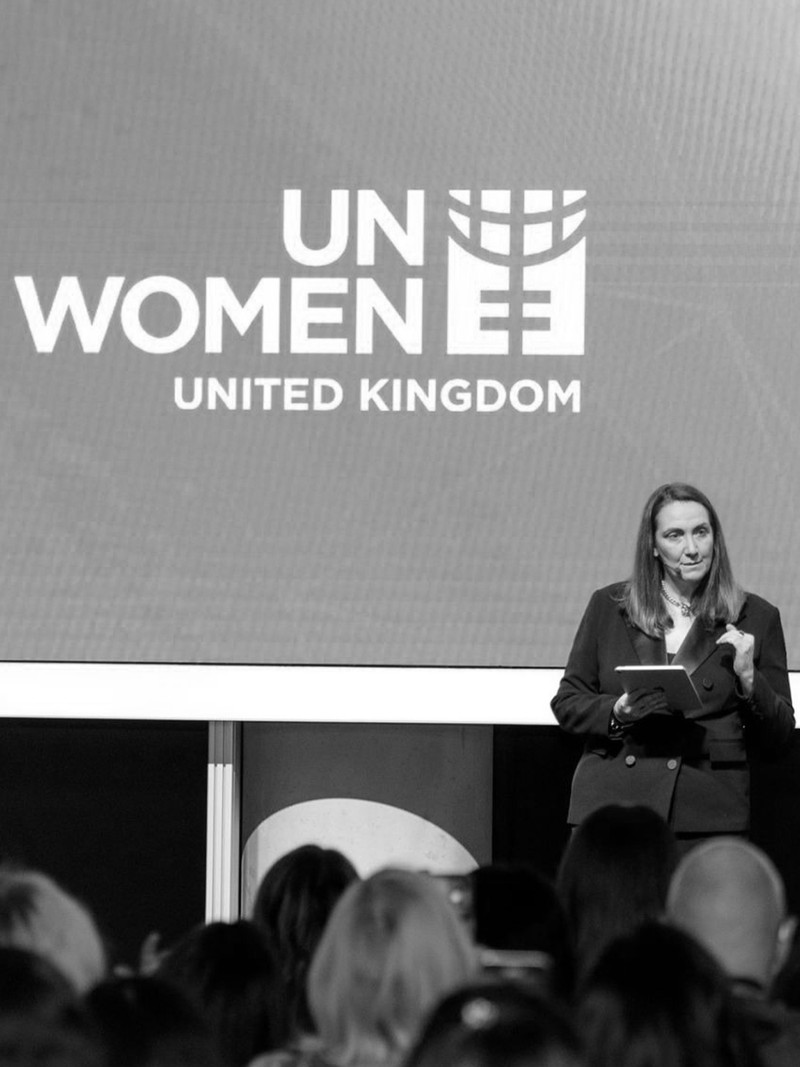
March is a great month for us because it’s International Women’s Day. A typical week can include a lot of in-person and online events, I might be giving a keynote address and we might have workshops involved. There’s a lot of organising that goes into that. Our campaigns are also running at the same time, so we could be in project meetings. I could be talking to a football club or a sports star about joining that campaign. Then, one thing that gives me a lot of joy is working with our country offices around the world. I could be on a call with our team in Turkey or Sudan. Some of the incredible women working with like women-led organisations all over the world share their updates. Then there’s all the normal stuff: team meetings, team check-ins, working with corporate partners. There’s also a lot of reporting, both internally to our UK board and to HQ in New York. In the lead-up to International Women's Day, we're often on global calls sharing our campaigns – it reminds you that there are millions of people who care and are trying to make a difference. That’s why I’m so lucky to have this job.
Right now, we're facing one of the best PR campaigns in history that is telling us hope is over. Women have too many rights and that's the reason for all the ills in the world. But we know that's simply not the truth. Shouting and screaming has never changed anyone's mind, so we have to meet people where they are, let them get to know us and engage them in our work in a meaningful way.
The question of work-life balance is never levied at men. We need to challenge these norms; most of the men I talk to are not comfortable with it either. They want to be more engaged in their children's lives. My perspective on men has changed a lot doing this role. Even in same-sex relationships, we can be guilty of falling into the same ‘one person does all of the caring and one person doesn't’ stereotypes. So, you have to work at it. Work-life balance ultimately has to be different for different people. For me, it’s about having time completely away from work, otherwise that’s where burnout comes from. While I can’t stop caring about the things I do, my cup has to be full to come up with the best ideas, campaigns and ways to run a team.
I have a clear three-to-five-year plan for the charity. After about five years, it will probably be my time to move on. There’s something about knowing when to move on – most CEOs will tell you that you know when it happens. I don't know what my next move would be but that’s okay – it would be quite boring to have it all mapped out ahead of me. All I know is it will be something to do with women and something about driving social change. I always want to be doing my bit to make this world a better place.
If I could tell that kid on the council state anything, it would be nothing to do with work. I’d tell her she'll find her home and be loved – at one time, I didn't think that would ever happen. If I'd have discovered love and stability earlier on, I probably would've made the switch earlier. I probably would've done this sort of work a little earlier. But you have to have confidence to believe the world can be different and better. And that’s what my wife gives me now: belief in myself. It makes me think maybe I can do all these other things I only dreamed of doing.
These days, we don't give young people a vision for the future. That stability of knowing you are loved is just so valuable and we need to do more of that. Our young men and boys who are acting out and following influencers online need to realise they are only being given a very narrow view of the world. Every time I talk to young women, I realise they have the language and skills to sort this out. It fills me with joy – and hopefully, I can be some sort of role model to them.
Visit UNWOMENUK.ORG
Or continue to comment as a Guest below
DISCLAIMER: We endeavour to always credit the correct original source of every image we use. If you think a credit may be incorrect, please contact us at info@sheerluxe.com.
/https%3A%2F%2Fsheerluxe.com%2Fsites%2Fsheerluxe%2Ffiles%2Fwebsite-images%2F2025%2F03%2Fsign-up-pop-up.jpg)