
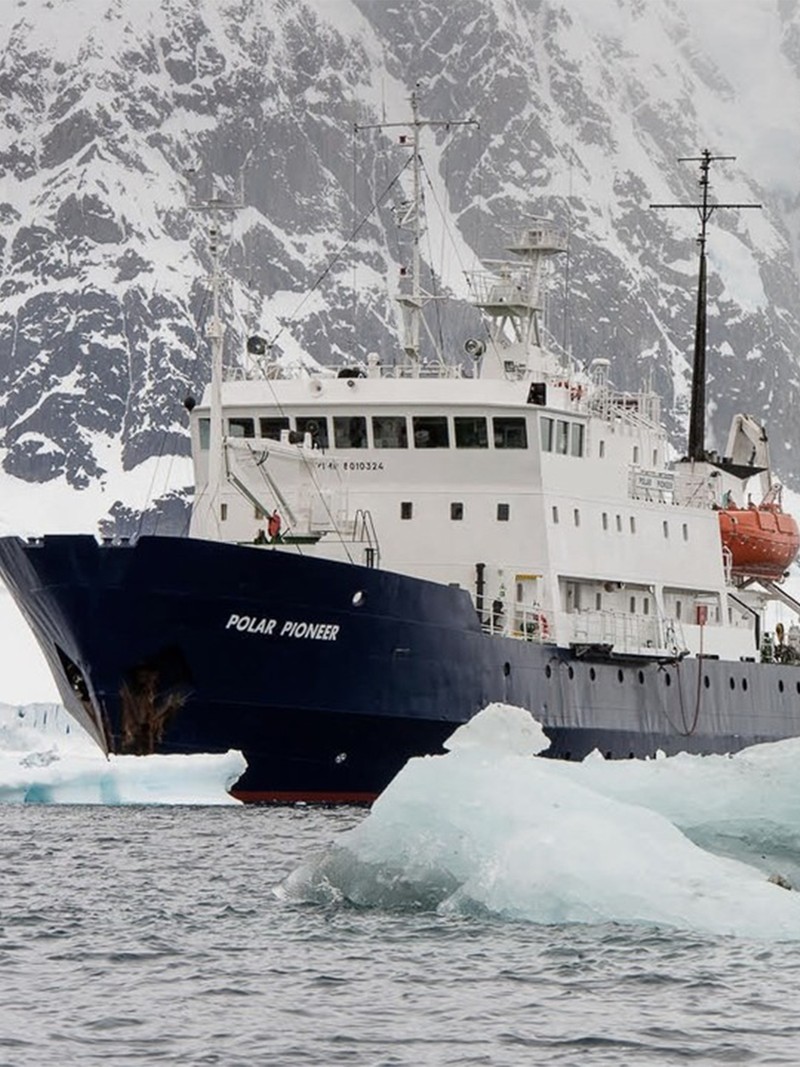
My Interesting Job: Polar Expedition Guide
Polar expeditions haven’t been a lifelong interest. I don't even like the cold! If anything, I had a more general interest in travelling because my dad was an airline pilot. We travelled as a family a lot when I was young and I’ve moved in and out of Canada – where I’m from – a lot. I even went to high school in Costa Rica in the 90s.
In my 20s, I started doing some expedition cruises on tiny ships that typically go to places bigger cruise ships can’t. My first one was down the Amazon in 2005 and my second was to Svalbard in the Arctic in 2007. I went to Antarctica for the first time in 2010. A happy accident turned this into a job in 2013 when someone I had met on an expedition cruise asked if I wanted to join a ship in Antarctica for six weeks. At the time, I was a business consultant living in Peru and it sounded like a nice break from being online all day.
Within two years, I had launched my own company. The reason? I fell in love with one of my colleagues on that Antarctica trip and six weeks turned into almost a full season. The role I had was passenger service manager because I’m good with people but I was also driving Zodiac boats and doing all the other guiding stuff – learning on the job about things like penguin breeding cycles. It was intense but after a short break at home doing some more business consulting, I came back for another season.
During that time, I noticed how many people suffered miscommunication with their travel agents. They would come on board and say it was their lifelong dream to go camping and it would be up to me to tell them that part of the trip had been sold out for 18 months. It was difficult to manage their disappointment, especially when you know how much money they’ve paid to be there. That was my lightbulb moment: what if we had a travel agency made up entirely of polar guides who knew exactly what they were talking about? Who knew the companies and details inside out? I knew that if we were the ones selling the trips, this would not happen.
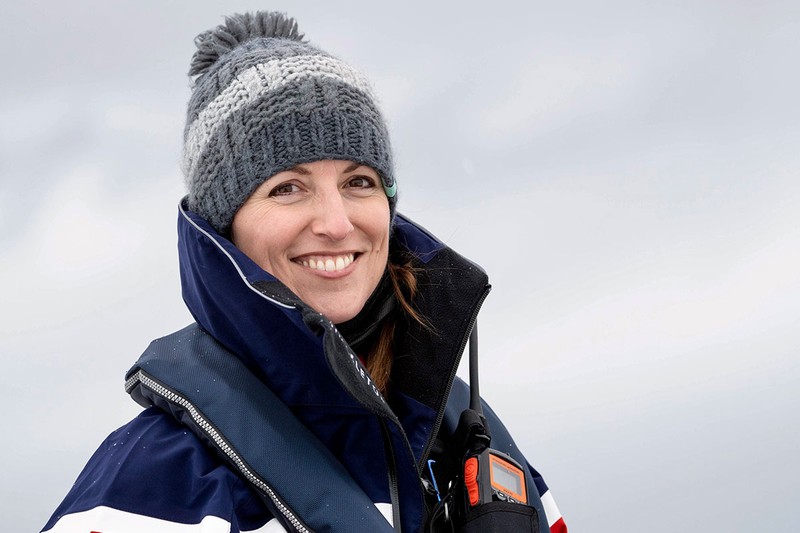
There was another big motivation to start my own company. All of these amazing guides weren't making money unless they were on a ship – they only earned a day rate. There was no job security, no benefits and it was a very insecure environment to work in. I thought that by creating this company, I could give them an alternative way to leverage their unique knowledge, be home more often and make their own decisions about how much they actually want to work on the ships. I expected it to solve more than one problem.
I ran the company for seven years by myself before I started taking on any other people. I was still business consulting to pay the bills and just taking polar referrals as they came in. It was very much a side hustle. It was the necessary reality to have two streams of income then because the polar company wasn't big enough to sustain me. But the emotional load was heavy: I was handling all the customer care, managing relationships with different operators in the polar regions, doing all the admin, the insurance, everything – on top of paying my bills. It took a lot out of me.
/https%3A%2F%2Fsheerluxe.com%2Fsites%2Fsheerluxe%2Ffiles%2Farticles%2F2026%2F04%2Faerotureaerial-business-edition-160426.jpg)
By 2018, I’d already started chartering 12-passenger vessels in the Arctic. In hindsight, the company wasn’t really ready for it – I just took the opportunity because it was there – and it was a huge amount of work. If you're doing something entrepreneurial, it’s crucial to have a home life, and possibly a partner, who is really supportive of the day-to-day. If not, I honestly think it’s the reason so many businesses fail.
Back then, my 9-5 involved a lot of answering client emails and operator questions. I spent a lot of time putting together paperwork. If I was the person chartering the vessel, I had to liaise with the ship owners; negotiate service capabilities; decide on the food options for guests’ different dietary needs; contact my guide pool; organise weapons for polar bear protection; deal with the Norwegian authorities to get my travel plan approved; get good gear that was waterproof but could also be properly branded. It honestly felt like a never-ending list.
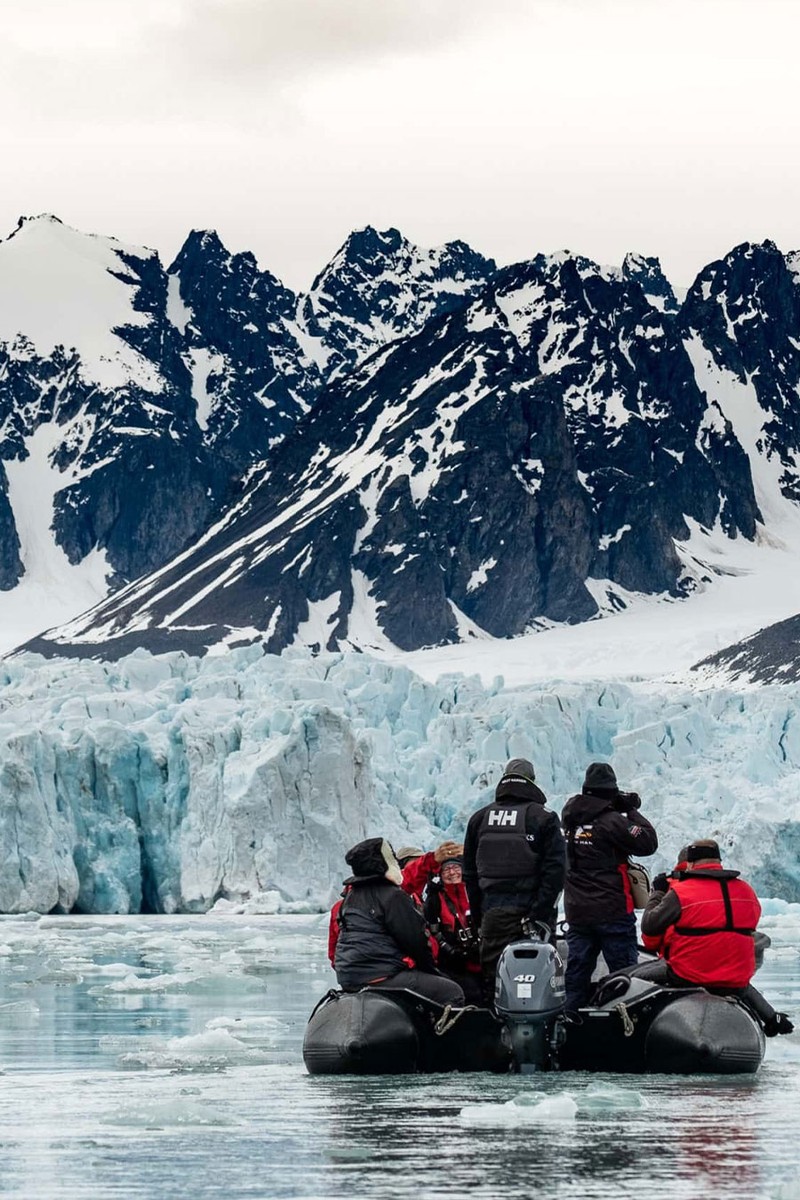
If I’m a guide on one of our trips, my day is really interesting. We get up early, go to the bridge and check the weather. We talk to the captain about the plans for the day and weather permitting, we plan two off-ship excursions per day – either going out on land to look at things or to hike or taking people out in Zodiac boats and cruising up to glaciers or around icebergs to look at wildlife. We have breakfast with the guests before heading off for two to three hours. We come back for lunch, warm up, let the guests enjoy an hour of downtime and then go out again in the afternoon. The ship is usually repositioned over lunchtime to a new location. In the evening, we do a recap and a briefing. We talk about where we went, answer any questions and then brief the guests for the next day. We have dinner and there’s usually some kind of educational lecture afterwards. The ship then repositions overnight, ready for the morning.
If I'm not a guide on one of our expeditions, I will usually be on board just for quality control. You can’t always trust what you’ve negotiated will be delivered. I also can't expect my guides to know my vision or advocate for my standards.
/https%3A%2F%2Fsheerluxe.com%2Fsites%2Fsheerluxe%2Ffiles%2Farticles%2F2026%2F04%2Fpolar-expidition-2-business-edition-160426_0.jpg)
Ironically, the company started to take off right before the pandemic. I had started getting lots of referral customers and my reputation was growing. I knew it wasn’t a one-woman show anymore but then Covid hit and the travel industry came to a stand-still overnight. In my business journey, this came to represent a ‘before’ and ‘after’. Frankly, I've never been so thankful to have another skillset – I really leaned on my business consulting for the first year. Having run my own thing for a while, I realised how much better I was at this job, which really helped me get through the worst of it.
When we were finally able to restart, I knew I wasn’t going to do it alone. I hired someone to handle social media and a renowned polar guide, who quickly started selling and is now my managing director. Demand skyrocketed and we just kept responding as the business grew. It’s interesting – the pandemic really forced me to take stock of the situation and what I wanted the company to be. I’m in a better place today because of it.
The idea for us isn't massive growth. We don't want to be a huge worldwide brand. My team are all remote and they enjoy their autonomy. We support each other really well. If I had any overarching business objectives, it was to create the type of company that I would want to work for. It’s helped me attract some incredible talent and we all have a great relationship. None of my team is micromanaged. I only require them to follow a couple of key protocols – and the only one I’m really strict about is responding to clients within 24 hours. Nobody – be it clients or otherwise – likes to be left hanging.
The thing people misunderstand about this job – especially as guides – is you are never off work. Even though you sleep at night, there’s always someone who needs something from you. You also have to eat breakfast, lunch and dinner with the guests – all of whom ask you the same questions. It can feel like Groundhog Day sometimes!
/https%3A%2F%2Fsheerluxe.com%2Fsites%2Fsheerluxe%2Ffiles%2Farticles%2F2026%2F04%2Fnekoharbour-business-edition-160426.jpg)
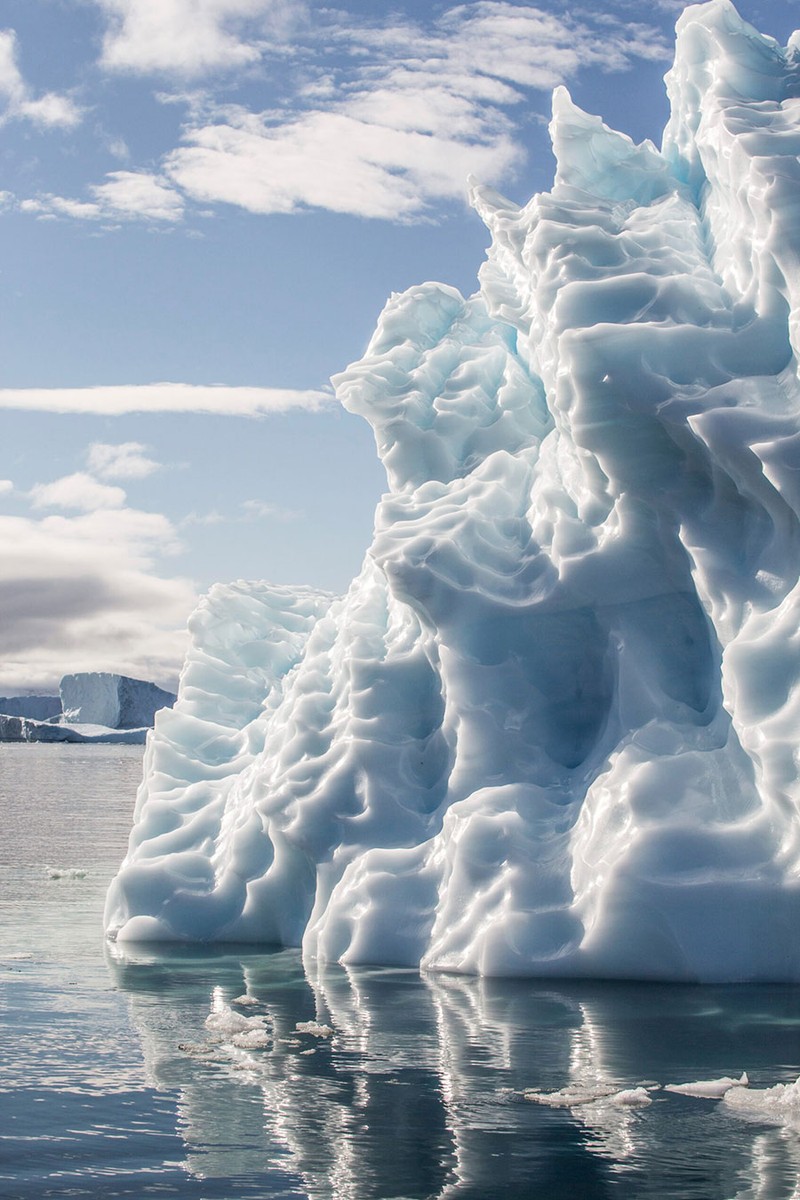
The Arctic season runs roughly from May to September. The region includes Svalbard, Greenland, Iceland and northern Canada. We have 24-hour daylight and the year's warmest temperatures. You have maximum opportunity to observe the various animals as the sea ice has melted back to allow access to places you can't otherwise get to outside of the summer season. As soon as we get into October, November, everything starts to ice up and ships can't access these areas.
During that time, it's dead winter in the Antarctic – 24-hour darkness. Once the Arctic season is over, the bigger passenger ships reposition down to the Antarctic and that season runs from October to March. The average trip is ten days. As well as chartering our own smaller vessels a couple of times a season, we’re placing guests on the bigger ships so they can have the chance to see penguins and whales. Right now, we probably have three dozen passengers across the different ships that are down there but in an entire season, we book hundreds of people onto these vessels. We only book through companies we know and trust so that I’m confident our guests will have the kind of experience I envision for them. We're very discerning about which companies we'll book our clients with.
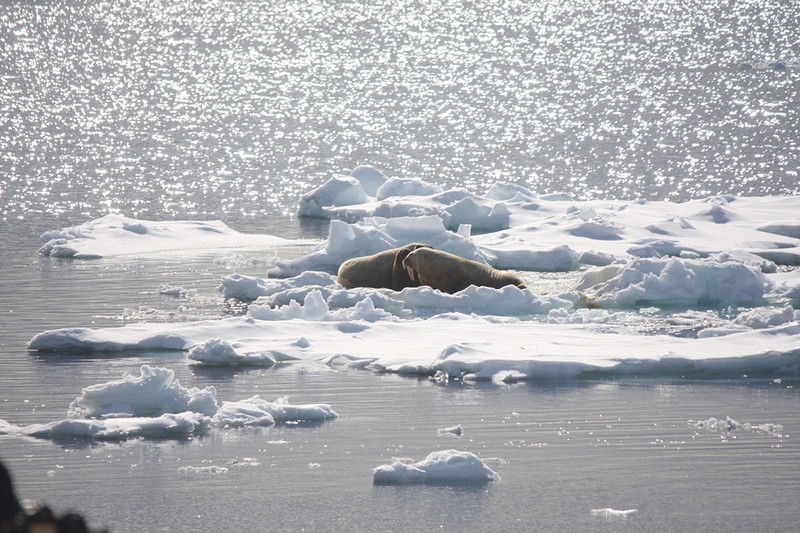
Managing client expectations is also a crucial part of the job. In Antarctica, you don’t have to worry – there’s a ton of ice, so the scenery delivers. But people go to the Arctic for polar bears and they can run in short bursts of up to 40kph. So, you might see them, you might not – you might see them up close, you might see them from five miles away. It's totally unpredictable. We tell people from the get-go, “Regardless of what you've seen in brochures and pictures, we are in a massive, open and often empty environment – we’re hoping for the best.” Frankly, seeing even just one polar bear is a huge win and you have to make sure guests understand that.
I've been to Antarctica over 45 times now. So, I already feel very lucky from that perspective. In terms of business goals, I hope we continue to grow with the same ethos we already have. I want this company to be recognised as one of the best in the industry in terms of integrity, our depth of knowledge and the uniqueness of what our experts have to offer. I like to think people look at my business model and find it interesting. Everyone who works for me is empowered, both in terms of their freedom to manage their own time but also in the somewhat unlimited earnings ceiling. I’m very proud of the concept and seeing other businesses replicate it would be the cherry on top.
I believe it's our responsibility, and opportunity, to use entrepreneurship as a tool for good. I’ve built this business from a humans-first perspective. I want people to work for me long-term and to treat our clients with the same level of respect I give them. We’re always trying to do the right thing. So, if you’re looking to turn your passion into a business, yes bring your previous experience with you but then think about the things you want to do differently. Also, be prepared and really think about whether you want to take on this emotional and mental load. Is there a way to pursue your passion but still within the boundaries of working for someone else? How much agency do you really want to have and could that exist in a traditional company? As the workplace evolves, there is more opportunity for that. Ultimately, if this journey has taught me anything, it’s not to try to be someone you’re not.
No Plan B: A Handbook for Incurable Entrepreneurs and Other Rebellious Souls by Heather Thorkelson is available here.
DISCLAIMER: We endeavour to always credit the correct original source of every image we use. If you think a credit may be incorrect, please contact us at info@sheerluxe.com.
/https%3A%2F%2Fsheerluxe.com%2Fsites%2Fsheerluxe%2Ffiles%2Fwebsite-images%2F2025%2F03%2Fsign-up-pop-up.jpg)