Where The Wellness Industry Is Headed Next
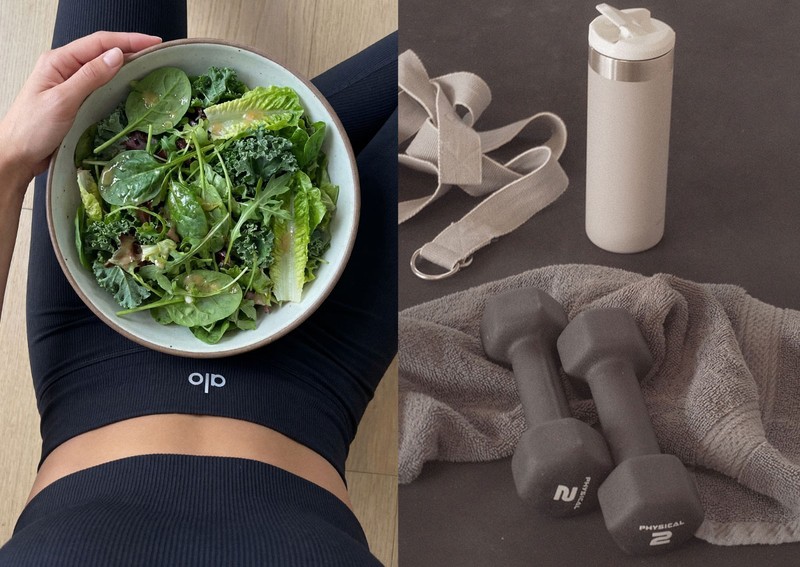
Recently, you might have seen a certain theme playing out on social media: #2016. Professional creators and general users are comparing their younger selves to where they are today. But aside from the leather leggings and fedora hats, another big trend dominated at that time. ‘Clean eating’ was hailed as the next frontier in health and wellness, and while certain principles from that movement endure (better knowledge around UPFs, for example), much of the movement has since been discredited, criticised as pseudo-science or, in some cases, actively harmful misinformation.
Not long ago, the wellness playbook was almost comically predictable. A glossy flat-lay. A clean caption. A before-and-after. A promise that if you bought the powder, swallowed the capsule, cut the food group or did the 6am workout, your life would click into place. For a while, the machine worked: wellness became a mass-market aesthetic, turbocharged by Instagram and, later, TikTok. But the hangover has arrived – and it’s shaping what comes next. The future of wellness won’t be built on vibes. It will be built on verification.
That doesn’t mean aspiration is dead. It means aspiration is being audited – by consumers, regulators, journalists and, increasingly, by the market itself. On Instagram alone, #fitspiration-related content has close to the tens of millions of posts, a scale that has helped spread both motivation and problematic messaging. The result is an industry now mired in misinformation, wellness-washing and a new kind of distrust. In that context, the biggest signals in the market – from the sale of Deliciously Ella to the rise of curated retailers like Healf, to creators like Emily English turning credibility into commerce – tell one story: wellness is entering its “trust” era.
The New Growth Hack
The 2024 acquisition of Deliciously Ella by Swiss food group Hero is more than a founder-exit story; it’s a marker of how the sector is maturing. Hero’s deal (financial terms are still undisclosed) effectively formalised what the market had already decided: plant-based, health-focused food is no longer a niche lifestyle choice – it’s a mainstream idea with serious global potential.
Deliciously Ella is a particularly instructive case study because it sits at the intersection of several forces that will shape the industry's future. The first is the idea of wellness as food, not just supplements. The brand rose to fame on recipes and whole-food ideals, then built a scalable product business. By 2023, it was reported to be generating £24m in revenue, with a substantial digital engine behind it. The acquisition shows that strategic buyers want brands that can win both shelf space and screens – not one or the other. It also shows the creator-to-company pipeline is real. What began as a blog, became books, an app, then a product range – a full wellness ecosystem that proved consumer health isn’t a trend; it’s now a defensive category.
Management consultancy McKinsey describes a $2 trillion global wellness market that continues to perform even when shoppers “trade down” elsewhere, driven by younger consumers in particular. It says, for big groups, buying a high-awareness wellness brand is a way to buy relevance – and to buy resilience. So, what can we expect? More acquisitions, more roll-ups, more strategic investment – and a premium placed on brands that can demonstrate genuine loyalty rather than rented attention.
The Curation Of Commerce
If consolidation is the top-down story, curated commerce is the bottom-up one. For years, online wellness retail looked like an endless aisle: thousands of products, contradictory claims, affiliate-driven “recommendations” and consumers left to self-diagnose via comment sections.
Healf’s rise is a response to that chaos. Founded by Lestat McCree and Max Clarke, Healf has positioned itself not simply as a shop, but as a filter – using expert input and customer reviews to vet products before listing them. “The biggest shift in this industry has been a move away from relentless optimisation toward a more personalised and balanced approach to wellbeing,” Max told the SheerLuxe Business Edition. “People are no longer constantly chasing generic health trends but instead seeking tailored solutions that fit their individual needs and lifestyles. This evolution has been driven by a growing understanding that community and connection matter as much as protocols, and that wellbeing isn't about perfection but rather about what works for you.”
All of that matters as curation becomes the category’s killer feature. In the next decade, the winners won’t necessarily be the brands with the most SKUs; they’ll be the platforms that help people make fewer, better decisions. “The biggest opportunity might lie in serving the healthy MAUs (monthly active users), people who aren't sick but want to actively monitor and understand their health on a regular basis,” explains Max. “This is the largest addressable market in wellness, yet it's been completely underserved because traditional healthcare only engages people reactively when they're already ill. With AI reducing care delivery costs and consumers willing to pay out-of-pocket for prevention, we can finally build successful businesses around keeping people healthy rather than just treating disease.”
The numbers suggest this model is landing. The Times reported Healf achieved £40m in sales for the year ending in March, offers 4,000+ health-related items and has seen rapid multi-year growth. Reports show the brand also secured a multimillion-dollar investment round led by Iris Ventures in 2025 – further evidence that investors see value in wellness infrastructure, not just wellness products.
The point is this: Healf is part of a broader shift from influencer-led wellness to systems-led wellness. In a market flooded with claims, the intermediary becomes the hero. “The investor case is simple: we're creating a category-defining business that combines best-in-class products and diagnostics with AI-driven personalisation to drive healthy MAUs at scale. This is much more than just selling supplements or tests, it’s about building the infrastructure for lifelong wellbeing, which is the most valuable mission in the wellness economy,” concludes Max.
The Trust Crisis
It’s hard to overstate how much the misinformation problem is accelerating. The early #fitspo era tended toward diet culture and unrealistic body ideals; today, the problem is more complex and more dangerous: fabricated expertise, pseudo-scientific certainty and algorithmic distribution that rewards confidence over correctness.
Even the tools of misinformation are evolving. A recent Guardian report described how AI-generated deepfake videos impersonating real doctors have been used to push unverified supplement claims on social platforms, prompting renewed calls for tighter regulation and faster enforcement by platforms. This matters for business because misinformation is not just an ethical issue; it’s a market-structure issue. It creates three commercial realities. First, regulation will tighten around claims, endorsements, and AI-generated content. Second, brands will be held responsible for the ecosystem in which they advertise, and third, ‘trust signals’ will become key brand assets (specifically, qualification, testing, sourcing, traceability, disclaimers, and partnerships). In that environment, the most valuable currency is no longer attention – it’s credibility.
The Breakthrough
So, where does this leave content creators? Not sidelined necessarily, but certainly upgraded. The creators set to dominate the next phase aren’t the ones who just look the part; they’re the ones who can translate complexity without turning it into theatre. They succeed because they meet a newly sophisticated audience with the right blend of clarity, practicality and restraint.
Emily English – or “Em the Nutritionist” on Instagram – is emblematic of this moment. The Evening Standard has described her as one of Britain’s best-known nutrition creators, reporting 1.3 million Instagram followers and significant TikTok engagement. Her content works because it doesn’t feel like wellness content in the old sense; it feels like food – approachable, repeatable, normal. That tone is exactly what consumers want after a decade of moralised eating and performative optimisation. It’s an approach Emily herself calls ‘simplicity backed by science’.
“We’re seeing less obsession with extremes and more focus on habits that support long-term health, things like fibre intake, muscle mass, blood sugar stability and sleep quality,” she told the SheerLuxe Business Edition. “Socially, people are drinking less, prioritising daytime routines and choosing movement that supports nervous system health rather than depletes it. In my view, gut health science in particular will continue to expand, especially as we better understand the gut-brain and gut hormone connections.”
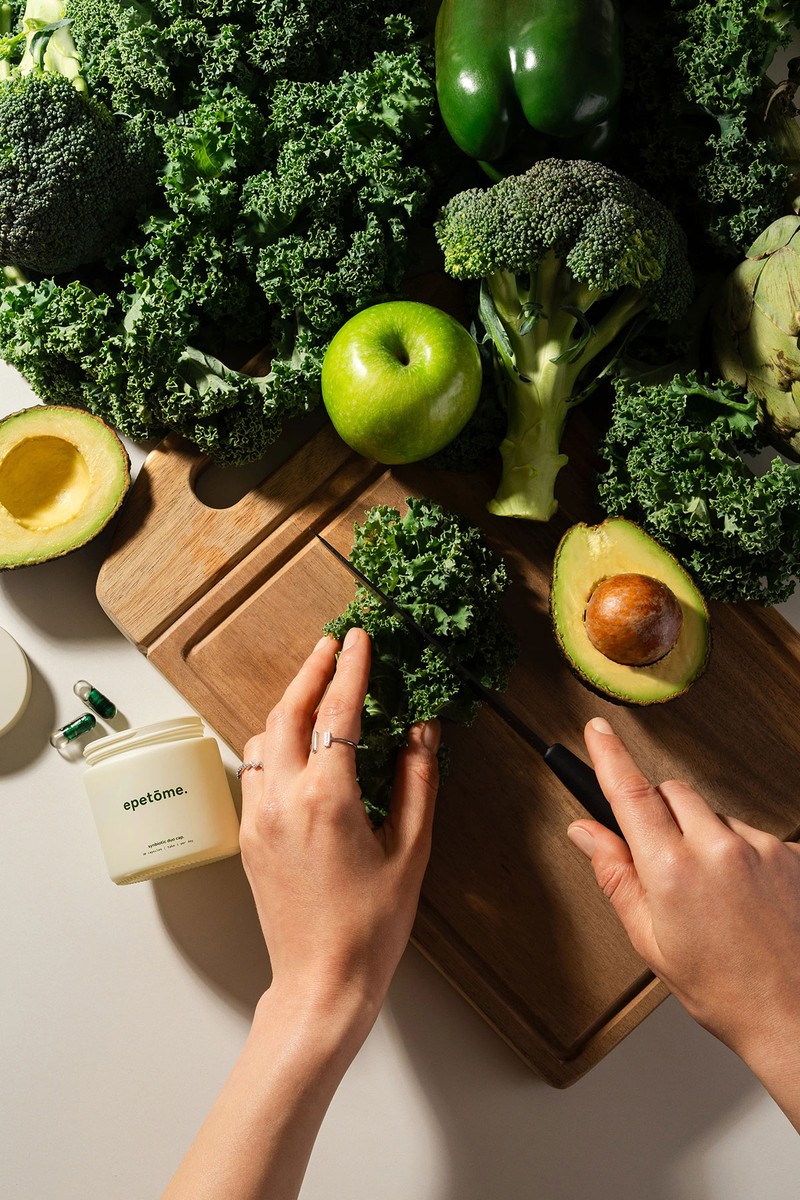
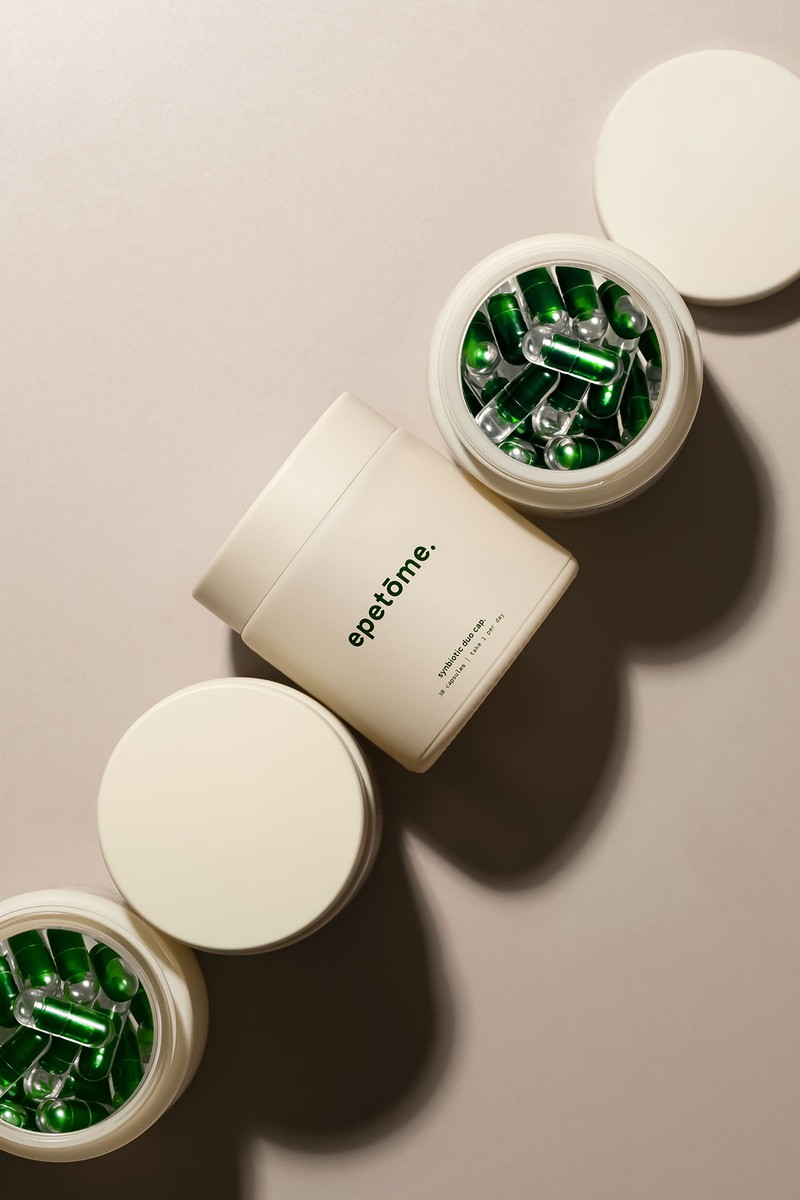
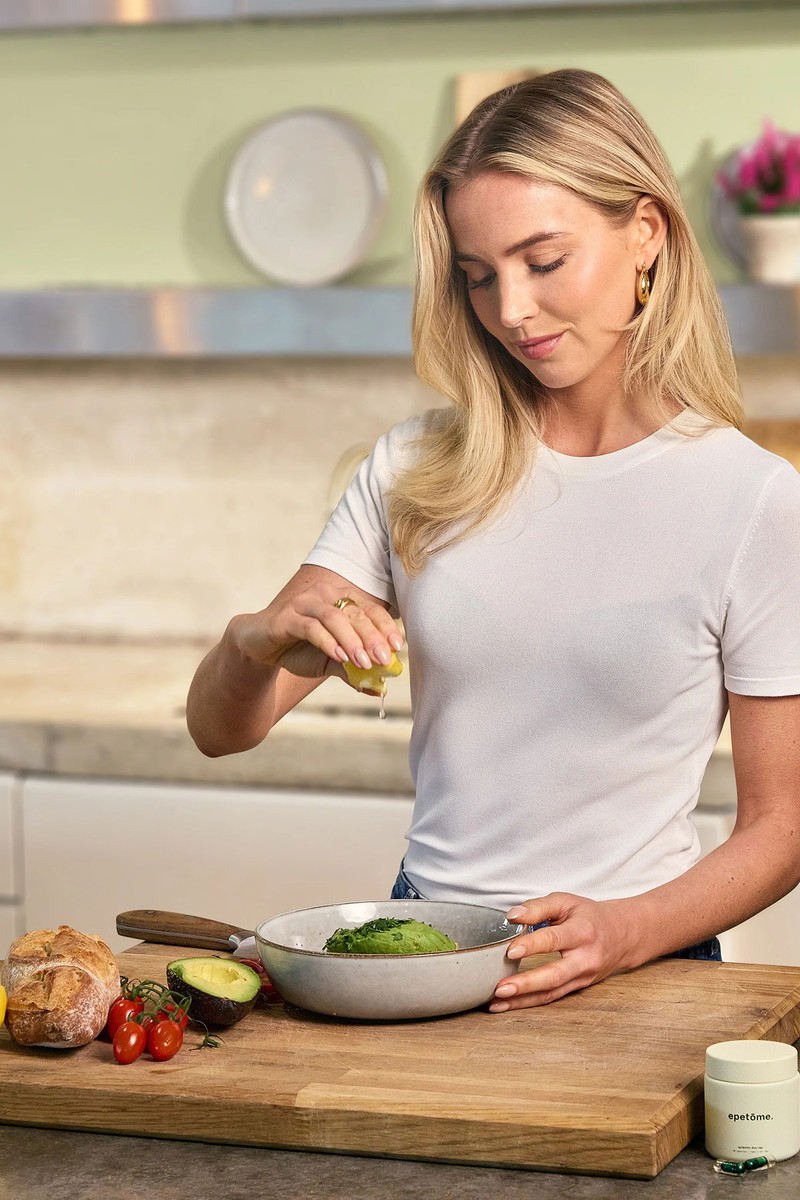
That brings us to Epetōme – Emily’s gut health supplement. It’s not a merch line or a random private label, but a product positioned as science-led and specific. On Epetōme’s own site, the brand highlights a daily pre and probiotic formulation with 11 clinically trialled bacterial strains, plus added ingredients like FOS fibre, vitamin D, zinc and biotin, and a delivery format designed for targeted release. Whether every consumer understands the microbiome is almost beside the point. What they recognise is the intent: less magic, more method. This is why creators like Emily are resonating: the audience has matured. People aren’t looking for a guru; they’re looking for a guide.
The New Supplements
One of the clearest signals of wellness’s maturation is the ascent of scientifically anchored supplement brands – Epetōme is one but Artah has also emerged as a standout case study. Launched in London in 2021, it’s rapidly scaled from a niche start-up to a well-funded contender in the crowded nutrition space, securing around $5.9m in funding. Its growth has been nothing short of striking – roughly 900% over four years, according to fulfilment partners – driven by targeted, science-backed formulations that move beyond generic ‘boost your wellness’ claims. What this represents for the industry is twofold: a pivot from aesthetic-led products to solutions grounded in evidence, and a competitive landscape where credibility – not just visibility – is now the currency. As consumers demand transparency and measurable results, brands that can substantiate their efficacy are not just winning market share, they’re redefining what it means to be a credible player in wellness.
The Segmented Future
One of the biggest misconceptions businesses still make is treating the wellness consumer as a single person. In reality, wellness is fragmenting into distinct needs states and identity groups – and brands will win by being precise about which wellness they serve. Back to McKinsey and its Future of Wellness research (which surveyed 9,000+ consumers across major markets, including the UK) that describes demand being catalysed across multiple dimensions – from sleep and nutrition to fitness, appearance and mindfulness – with younger generations prioritising wellness but also reporting burnout and worse self-perceived health. That insight cuts two ways: yes, there’s growth but not one way to achieve it and two, while social media drives discovery, it also drives confusion, fatigue and distrust. Therefore, the opportunity is in building brands and platforms that acknowledge nuance: perimenopause support won’t just look like gut health; sleep won’t only look like skincare and mental wellbeing won’t look like discipline.
What The Next Winners Will Look Like
Put the signals together and a coherent picture emerges. The future wellness winners will have three attributes. First, they’ll be measurable. Expect more brands to talk about metrics (sleep scores, strength gains, blood sugar stability, symptom tracking) and to design products around specific outcomes. Wearables and at-home testing will continue to pull wellness toward quantified health, while retailers and regulators push back on vague claims.
Second, they’ll be curated. The era of more products is fading. The next era is fewer, better, vetted. Healf’s model – scale plus filtration – speaks directly to the consumer’s biggest pain point: not lack of options but too many options. “Our ambition at Healf is to build Wellbeing Intelligence – a platform that empowers people with personalised, actionable insights that genuinely improve their lives over time,” says Max.
Finally, the best brands will be culturally literate. They will communicate like humans, not like ad copy. They’ll understand the sensitivity around diet culture. They’ll be careful with transformation narratives. They’ll know the difference between motivation and manipulation. And they will recognise that the old #fitspo framework doesn’t just look dated – it looks suspicious. This arguably sounds like a space where intelligent content creators – and their associated brands – can thrive. “Consumers are increasingly informed and sceptical of quick fixes,” agrees Emily. “Brands that win long-term will be those grounded in science, transparency and real-world results. For us, our customers’ experiences do the talking – genuine outcomes will always outperform trend-driven marketing.”
The Bottom Line
Wellness is not going away; it’s becoming infrastructure – but the industry is undergoing a credibility reset, and the companies that thrive will be those that treat trust as a core capability rather than a marketing line. “For a long time, wellness was viewed as a solo pursuit, but moving forward, wellness will be a huge part of how we connect with others,” says Olivia Ferdi, CEO of Trip. “As we continue to move away from alcohol-centric socialising, consumers will value brands that facilitate community and help them to unwind in a healthier way. Brands and spaces that prioritise health and connection in a credible and accessible way will continue to thrive.”
Wellness brands are also becoming acquisition-grade assets – especially when they combine product, platform and audience. Curated retail can scale – which is why investors are backing ‘navigation’ as much as they back products. “People don’t want to be overwhelmed by choices and costs. The majority aren’t interested in a multi-stage wellness plan – they want one or two high-quality, effective products that seamlessly fit into their everyday lives, wherever they are – without compromising on style or experience,” adds Olivia.
Finally, the creator economy’s next phase will be expertise-led, not hype-led – with product stories anchored in specificity and consumer need. The misinformation crisis – now amplified by AI – ensures that proof and governance will move from nice-to-have to a license to operate. In the end, the future of wellness looks less like a moodboard and more like a contract: between brands and consumers, platforms and publishers, creators and communities. So, it seems while the boom isn’t over, it is growing up.
Or continue to comment as a Guest below
DISCLAIMER: We endeavour to always credit the correct original source of every image we use. If you think a credit may be incorrect, please contact us at info@sheerluxe.com.
/https%3A%2F%2Fsheerluxe.com%2Fsites%2Fsheerluxe%2Ffiles%2Fwebsite-images%2F2025%2F03%2Fsign-up-pop-up.jpg)