Why Uganda Is The Next Big Destination To Know
The Lowdown
Neighbouring Kenya and Tanzania have long dominated East Africa’s safari circuit and Uganda is not the first place that comes to mind for the Big Five and gorilla trekking. However, over the last couple of years, the country has made a deliberate push to improve its infrastructure as part of a strategy to position itself as a high-end, nature-led tourism destination. Roads and local airstrips have been improved to make the more remote regions like Bwindi Impenetrable Forest and Queen Elizabeth National Park more accessible. And, very conveniently for travellers from the UK, Uganda Airlines launched a direct flight from London to Entebbe last May.
Traditionally, animal lovers have travelled to Rwanda to spot the once critically endangered mountain gorillas. But Uganda, with more than half the world’s population of the primate, is now considered the best destination; what’s more, trekking permits are significantly cheaper. Accommodation is also levelling up to new standards of luxury and nowhere is this more evident than at Gorilla Forest Lodge, An A&K Sanctuary which re-opened last summer after a massive refurb.
Getting There
After a night at Hotel No5 in a residential suburb of Entebbe, the first part of the adventure begins with an hour-and-a-half’s flight over immense Lake Victoria and a patchwork of lush emerald hills before the landscape transforms into dense rainforest and your small plane lands at Kihihi. It’s then another hour and a half or so by jeep along narrow, bumpy, sometimes muddy roads to the entrance of Bwindi.
Where You’ll Stay
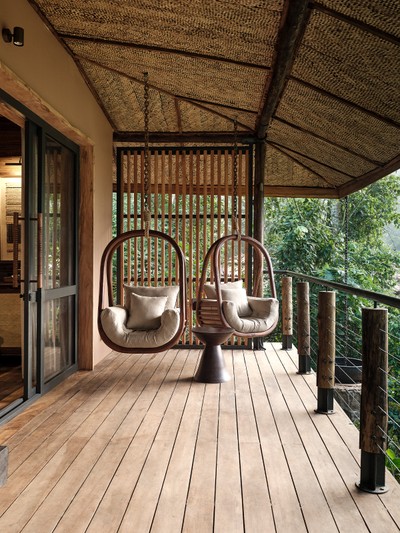
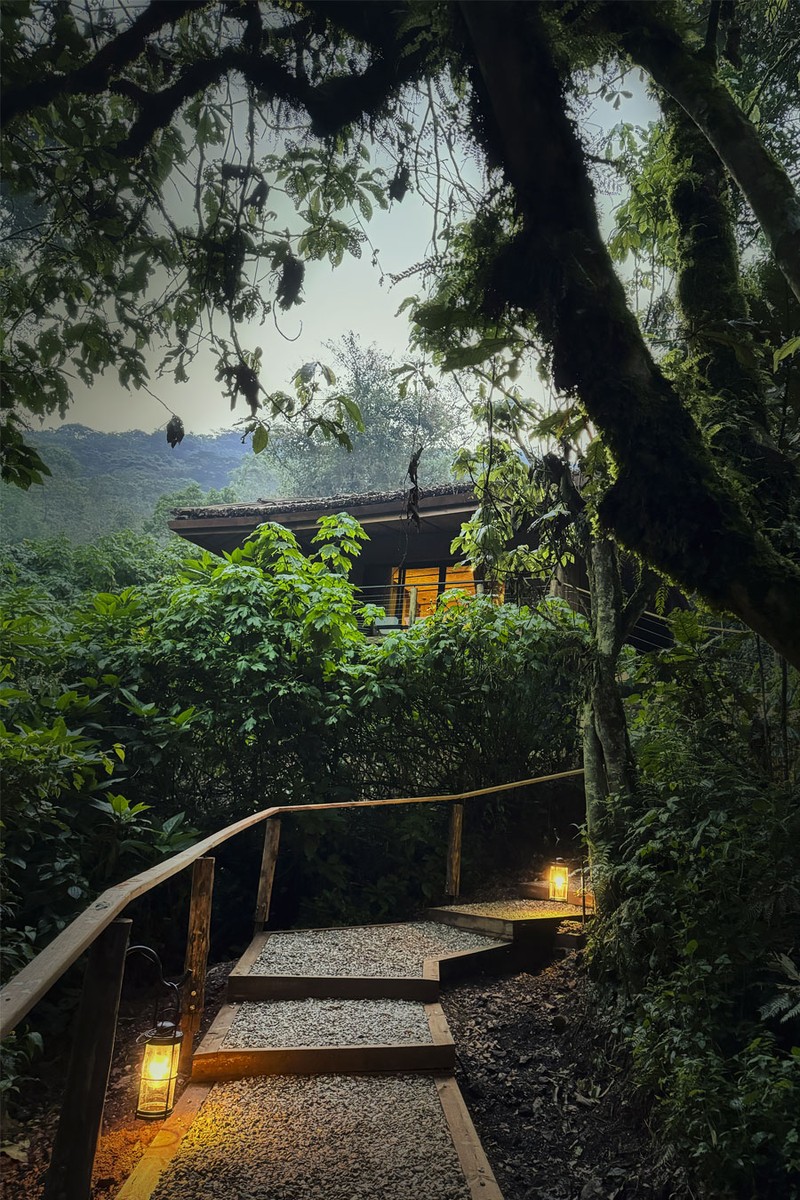
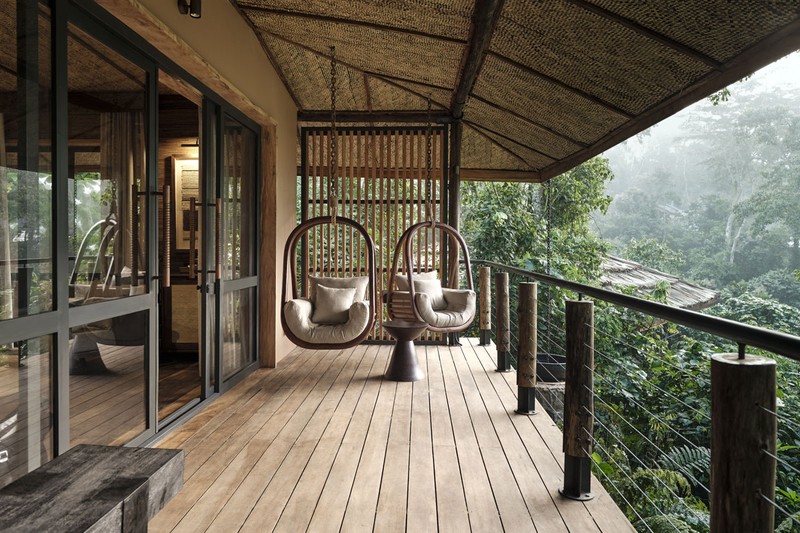
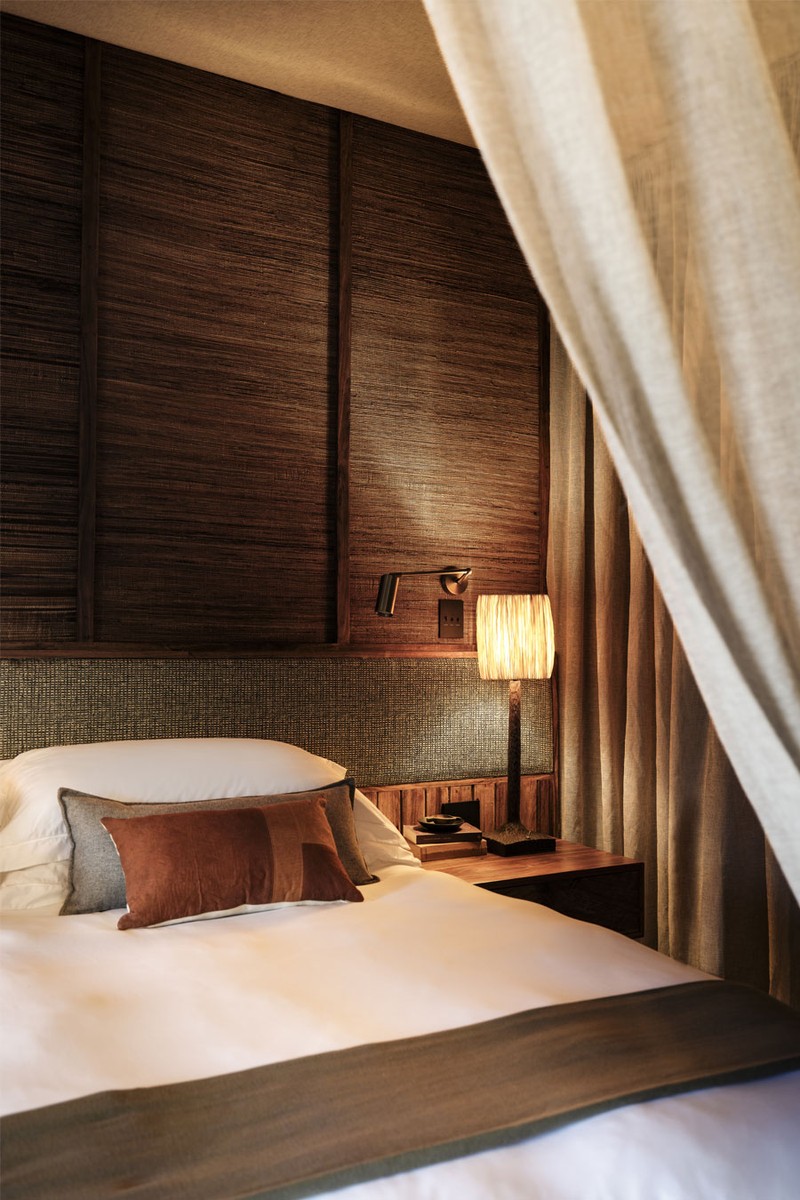
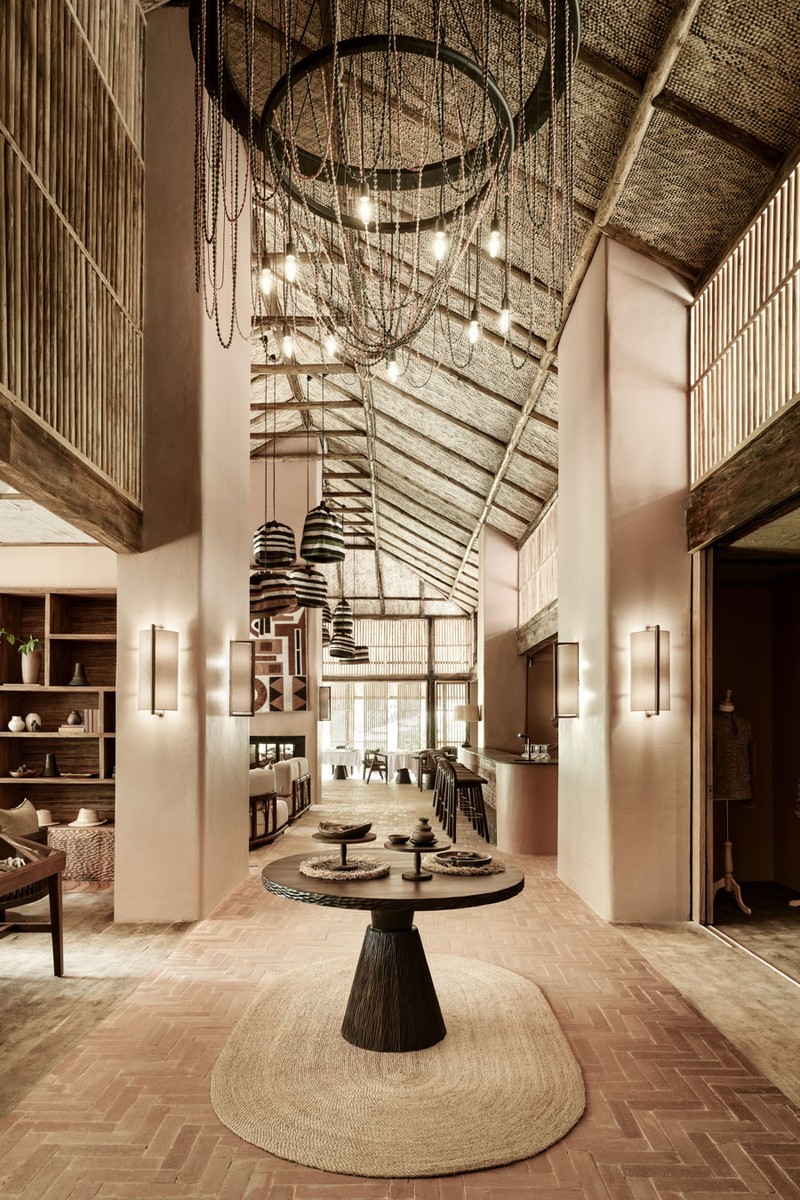
Gorilla Forest Lodge is the only luxury five-star lodge within the UNESCO-listed Bwindi Impenetrable Forest, so is ideally located for gorilla trekking. Set in a spectacular location overlooking the jungle canopy, there are just ten spacious villas set well apart in the forest, each with a private veranda from which you can spot monkeys, rare birds and colourful butterflies, and even gorillas that have been known to wander past. Inside, expect king-sized four-posters hung with a gauze canopy, organic textures and earthy tones – think green, terracotta, clay, woven banana leaf ceilings and wooden floors – and a large bathroom with a deep circular soaking tub and a walk-in shower. Other touches include the complimentary minibar which is stocked daily with homemade biscuits, a tote with a yoga mat and hand weights, and a heated pad on the bed which is switched on nightly before you get back to your room. Your villa also comes with a personal attendant to fulfil your every need, most usefully to clean very muddy hiking boots.
The main building has an indoor-outdoor lounge and bar where, in the evenings, a local musician sings African folk songs around the campfire while guests enjoy a sundowner. Amazingly for so deep in the forest and what feels like miles from anywhere, the food was way beyond expectations in terms of variety, freshness and choice – some of the more international dishes include chicken salad, carrot and ginger soup, beef tournedos, lamb chops and there’s a vegetarian option too. But do opt for some of the chef’s take on Ugandan street food like rolex (short for ‘rolled eggs’ wrapped in a chapati) and matooke (mashed plantain wrapped in banana leaf), as well as the excellent fish curry. Puddings are definitely a highlight and include the likes of crème brûlée, mango tiramisu as well as a cheeseboard. Drinks are all included, even premium champagne, spirits and wines, and there’s a full cocktail menu – we loved the Bwindi Forest Mule (gin, cucumber, mint lime and ginger beer).
There is also a small spa (a massage is a must post trek), a lovely boutique selling stylish linen pieces, some trekking essentials and locally made products and souvenirs, and the Explorer’s Lounge where you will find maps and a selection of books on the flora, fauna and culture of Bwindi and Uganda.
/https%3A%2F%2Fsheerluxe.com%2Fsites%2Fsheerluxe%2Ffiles%2Farticles%2F2026%2F03%2F160326-gold-why-uganda-is-the-next-big-destination-to-know3.jpg)
In Search Of The Mountain Gorillas
Trekking days start early at the Lodge. After breakfast, guests are fitted with all the essentials like gaiters, backpacks, raincoats, walking sticks, a packed lunch and water. First stop is the Visitor Information Centre for a pre-trek briefing on the complicated etiquette involved in meeting a giant silverback and his family. Only eight visitors are allowed to view each gorilla group for one hour per day and, as the early-morning mist clears and the sun makes its appearance, you’ll set off accompanied by a guide, two trackers (armed with A-47s for scare shots) and porters who carry the backpacks and water, and help navigate the sometimes-tricky terrain. The trek itself can take anywhere from an hour to several, depending on where the gorilla family your group has been assigned has moved to overnight. Be prepared, it can be quite physically taxing, especially as you are at fairly high altitude. Bwindi is a dense, mist-covered rainforest and the name ‘Impenetrable’ is no exaggeration – so expect uneven terrain, thick vegetation, tangled vines, steep slippery slopes, mud and humidity – but that is part of the magic, as this is not a staged wildlife encounter but a genuine search. Once the trackers, who have gone ahead, report finding your gorilla family, masks are put on (gorillas can catch human diseases, such as colds and flu or skin diseases like scabies), the porters hang back and the guide takes you close to the gorillas.
David Attenborough once said: ‘There is more meaning and mutual understanding in exchanging a glance with a gorilla than with any other animal.’ For some, exchanging that first glance with a full- grown male just meters away is a very humbling experience and potentially life-changing, even though he may seem totally unconcerned by your presence and will continue munching on leaves (they eat about 15-20kg of greenery a day). More often than not, the silverback will be lounging on his back while being groomed by some very attentive females, while the younger members of the family will be more playful and curious about human presence.
If you opt for a second trek, you’ll usually head to a different area, which may involve a 45-minute bumpy jeep drive along muddy tracks. Some of the treks start with a gentle walk through tea plantations – communities living near Bwindi rely on agriculture and tea is a very profitable source of income; the bushes also act as a natural buffer as the elephants and gorillas in the forest don’t eat the leaves, keeping them at bay from villages and from raiding other crops. You’ll enjoy magnificent rolling views in varying hues of green before entering the thick forest and a hard climb before reaching your gorilla family.
It’s good to know that your visit will also play a meaningful role in the long-term protection of these primates. The revenue generated through gorilla tourism directly supports a range of vital conservation efforts, including the preservation of their natural habitat, anti-poaching patrols and the careful habituation of gorilla families to human presence. It also funds community-based conservation initiatives that help ensure local people benefit – many are employed as guides, trackers and porters.
When To Go
High in the mountains, Bwindi has a wet, tropical climate, with temperatures averaging 24-25°C year-round but it gets cool at night. This part of Uganda has two rainy seasons, from April to May and September to November, so December to February and June to August are generally considered the best times to visit.
What To Wear On Your Treks
Opt for comfortable, casual clothing made from natural, breathable fabrics. Long trousers and long sleeves are best to protect against scratches from thorny bushes, as is a pair of garden gloves. Temperatures can vary significantly throughout the day, so it’s best to choose pieces that can be layered. Bring a good pair of comfortable walking/hiking boots with textured soles and wear long socks and gaiters (the Lodge has a plentiful supply of these).
What Else To Do In Uganda
In addition to gorilla trekking, you can choose from a number of other experiences in Uganda, depending on the length of your stay. Murchison Falls National Park is Uganda’s biggest nature reserve and where the Nile surges through a narrow gap over a massive drop. The park is famed for its spectacular birdlife (in particular the rare shoebill stork), elephants and hippos. Kibale National Park is the best place to see chimpanzees in particular, as well as red colobus and L’Hoest’s monkeys swinging between the branches of giant strangler fig trees. Here, you can also hike around the rim of an extinct volcano and swim in the lake inside the crater. Queen Elizabeth National Park is located on a key migration corridor at the foot of the southwest’s snow-capped Rwenzori Mountains, and the savannah grasslands and wetlands are roamed by the likes of leopards, herds of elephants and buffalo, and the rare tree-climbing lions are frequently sighted too.
Abercrombie & Kent offers a five-day private ready-to-book trip to Uganda from £4,860 per person, based on two sharing. Price includes internal flights, transfers, gorilla trekking and three nights at Gorilla Forest Lodge, An A&K Sanctuary on a full board basis.
Or continue to comment as a Guest below
DISCLAIMER: We endeavour to always credit the correct original source of every image we use. If you think a credit may be incorrect, please contact us at info@sheerluxe.com.
/https%3A%2F%2Fsheerluxe.com%2Fsites%2Fsheerluxe%2Ffiles%2Fwebsite-images%2F2025%2F03%2Fsign-up-pop-up.jpg)