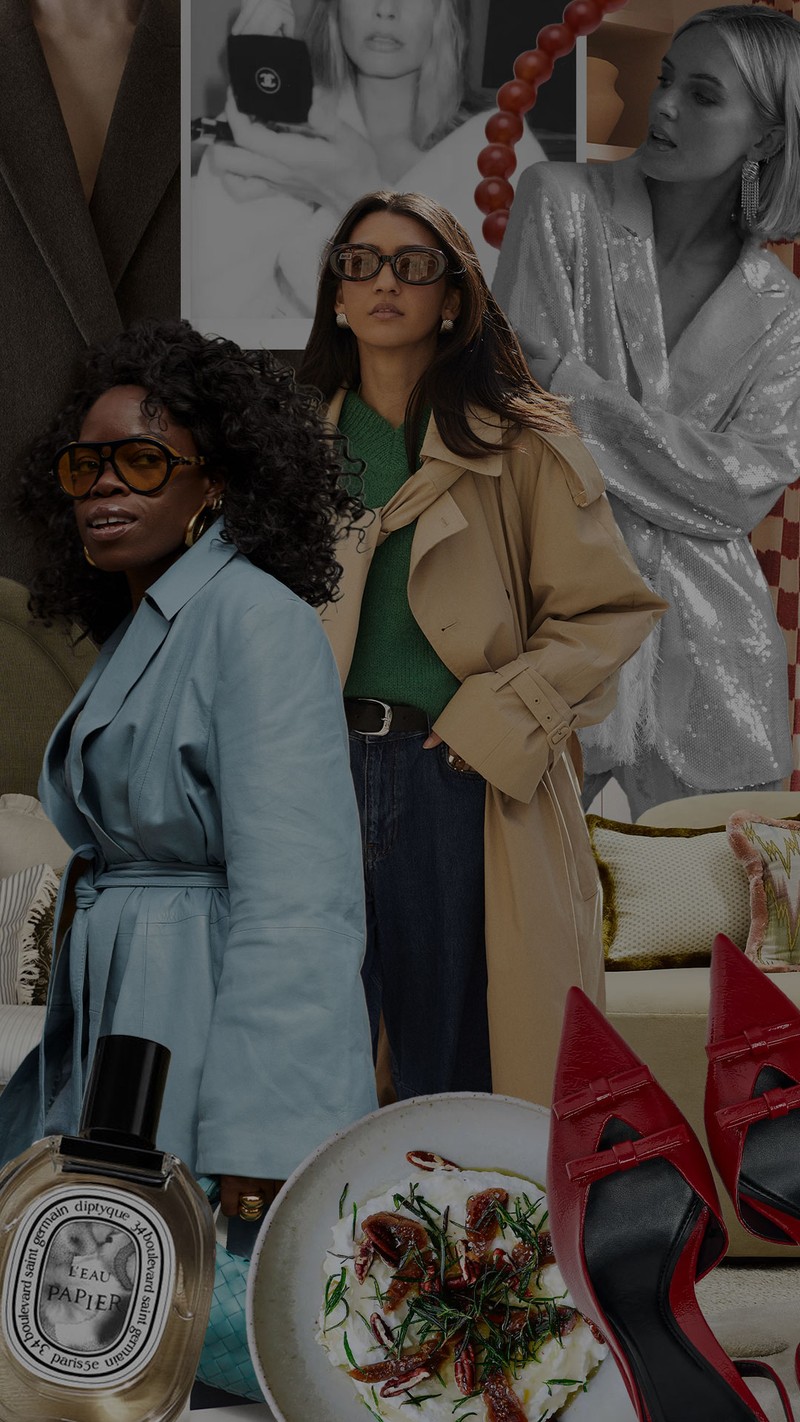
3 Tastemakers On The Art They Love
All products on this page have been selected by our editorial team, however we may make commission on some products.

Rejina Pyo
I remember buying my first painting at a market in France about 20 years ago. Going to brocantes was such a great way to discover different categories of art and objects. I felt very excited as I had recently moved from Seoul, so the European market culture was a joy to experience.
I never consciously thought, “Oh I'm going to start collecting art.” I love physical objects and I like having them around me day to day. Whether they're rare designer chairs, lamps, paintings or ancient sculptures, one by one they became a collection. I remember British Vogue asking if they could photograph my designer chairs, and that was the first time I realised I had amassed a collection.
I need to have an emotional connection with the piece or with what the artist is trying to communicate. I can then be adventurous in what I collect while still maintaining a cohesive thread throughout the collection.
I grew up in a household filled with Korean antiques and small objects collected during my mother's travels. She was a fashion designer and interior designer, and is now a painter and curator. That definitely played a part in how I see and appreciate unusual and unique things. Growing up in Asia and now living in the Western world has also broadened my perspective.
These days, I often find artists online. It's much easier to discover emerging artists. I usually follow an artist over time to see how they develop. I regularly visit galleries in London and abroad when I'm travelling. I also make a point of seeing graduate shows at schools such as Goldsmiths, the Royal Academy Schools and Slade. Platforms like Artsy are also great for discovering new work. I come across so many talented young artists who deserve more opportunities to exhibit their work. It can be incredibly challenging unless you're represented by a major gallery.
In 2024, I curated a show called As She Is. It featured a range of established and emerging female artists, including Chantal Joffe, Antonia Showering and Angela de la Cruz. Since then, I've started curating intimate exhibitions at our 86 Golborne Road space and our Soho store to connect our community with emerging artists. If you discover an artist you love on Instagram, don't be afraid to reach out to them directly.
All of my purchases are emotional and somewhat impulsive. But I've never regretted any of them because they came from a genuine love for the work. You can always make a piece of work somewhere.
/https%3A%2F%2Fsheerluxe.com%2Fsites%2Fsheerluxe%2Ffiles%2Farticles%2F2026%2F06%2Fragina-pyo_0.jpg)


When living with someone else and their tastes, it’s wonderful if you naturally agree on things. But it's equally valuable to educate each other and discuss why you love something. A collection can grow beautifully through those conversations. Fortunately, my husband and I share a similar aesthetic and tend to be drawn to similar pieces.
Framing totally depends on the artwork. Personally, I love seeing the sides of paintings, where you can trace the passage of time and the painter's marks. If I do frame something, I love a floating tray frame with a very thin edge. It can be made in different woods or metal finishes, depending on the piece. When it comes to hanging art, I definitely move things around first and decide what feels right. Once I'm sure, it's carefully hung.
If you’re feeling intimidated by the art world, come and visit one of our exhibitions for a start. Our emerging artists make it feel approachable and are a great entry point to an art collection. I would also encourage people to look at as much art as possible, visiting galleries, exhibitions and studios. Think about what you like and don't like. Follow artists and learn about what they're trying to achieve through their work. Most importantly, ask yourself whether you genuinely love something; you have to trust your gut instinct and not be too influenced by what other people like.
The artists I’m excited about right now are Joline Kwakkenbos, Suleman Aqeel Khilji, Sangwoo Lee, Catherine Repko, Ishbel Lowther, Antonia Showering, Cassi Namoda, Lena C. Emery, Marcus Leotaud and Angela de la Cruz.
Choosing my favourite art is akin to being asked to choose a favourite child. That said, I do love the works I own by Angela de la Cruz and Chantal Joffe. They have inspired me for decades, and having pieces by them is a reminder of their motivation, courage and generosity of spirit.
If I could acquire any artwork in the world, it would be Paw by Philip Guston. I'm currently reading his writings for the second time, and his courage to follow his instincts and take risks, even after achieving great success, continues to inspire me. And perhaps a giant work by Mark Rothko to fill an entire room and make me cry!
Visit REJINAPYO.COM

Lonika Chande
The first piece of art I ever bought was a still life. I found it at a brocante many years ago, and I still own it today. I was drawn to the battered frame, the rich colours, the texture of the oil paint and its wonderfully naïve quality. It wasn't a significant purchase, but it taught me that art doesn't have to be important or expensive to be meaningful. Sometimes it's simply a piece that speaks to you.
Art has always been part of my make-up. I grew up surrounded by it. My mother, Lucy Dickens, is an artist, so creativity was woven into everyday life. There wasn't one defining moment that sparked my interest in collecting. It evolved naturally from a lifelong appreciation of living with art and the character it brings to a space.
There are a few pieces by my mother that mean a great deal to me. There is a huge oil painting of tropical fruit that she painted as our wedding present, and a wonderfully bonkers painting of her childhood Sunday lunch. I also have a crewel work bird stitched by my great-aunt in the most perfect red metal frame. These are pieces I would never part with.


My taste in art is quite eclectic. Through sourcing artwork for clients, I've developed an appreciation for many different mediums, from photography and oils to collage and works on paper. Over time, I've become increasingly drawn to character and emotion rather than a particular style. I love mixing different types of artwork within a home, as it creates a more layered and interesting collection.
I think my taste has emerged quite instinctively, rather than through any conscious effort to develop an eye for art. That said, I've always looked at a lot of it. Growing up around art, regularly visiting galleries and exhibitions, and sourcing pieces for clients has given me a broad visual reference point over time. I think the more you look, the more confident you become in trusting your own response to a piece. More recently, I took my five-year-old daughter to see the Rose Wylie exhibition at the Royal Academy of Arts, which she loved. It was a reminder of how valuable simply looking at art can be in shaping your taste and perspective.
I'm always on the lookout for new artists and artworks. I enjoy visiting art fairs such as the Affordable Art Fair and graduate shows, which are great ways to discover emerging talent. There are also some brilliant online platforms, including Partnership Editions and Felt Collections, which do a wonderful job of championing both established and up-and-coming artists.
For more affordable pieces, I often look at auction sites such as Auctionet. You can find some wonderful things if you're prepared to spend a bit of time looking. For more significant purchases, I would recommend Anna Kirrage or Nikki at Finch Projects, both of whom have a brilliant eye. I also love McCully & Crane. Their pieces feel thoughtfully curated, and they represent a mix of contemporary artists whose work is often painterly, characterful and highly liveable.
Some of my favourite pieces have been impulse purchases. I tend to trust my instinct when it comes to art. If I keep coming back to a piece or can't stop thinking about it, that's usually a good sign.
I acquire the piece first and find a place for it later. This is particularly true of smaller works, which are often bought simply because I love them. Larger pieces tend to be more considered and are sometimes purchased with a specific room or wall in mind, but I generally prefer to buy art because I connect with it, not because it fits a particular space.
Couples rarely share exactly the same taste, and often the most interesting homes result from different perspectives coming together. Framing can make a huge difference, helping a piece sit more comfortably alongside other works. Equally, placing a more traditional or dated piece in an unexpected context can give it a new lease of life. If there is a genuine difference of opinion, there is nothing wrong with hanging a piece in a study or another space where it can be properly enjoyed by the person who loves it. Not every artwork has to be universally adored to earn its place in a home.
/https%3A%2F%2Fsheerluxe.com%2Fsites%2Fsheerluxe%2Ffiles%2Farticles%2F2026%2F06%2Flonika-chandediningroom.jpg)
It depends largely on the artwork, but I tend to favour relatively simple framing. I usually prefer timber frames and generally avoid anything too chunky or ornate, as I like the focus to remain on the artwork itself. A linen mount can look incredibly smart and add a subtle layer of texture. For me, framing should complement the piece rather than compete with it.
I'm inclined to experiment and move art around. I love the new lease of life a piece can get when it's moved to a different room or paired with different objects. Moving house is particularly exciting, as artworks often reveal themselves in completely new ways when placed in a different setting.
If you’re starting out collecting art, I’d say start small and don't put too much pressure on yourself. You don't need to begin with a major investment or have perfectly defined taste. Visiting galleries, art fairs and curated platforms can be a great way to start understanding what you are naturally drawn to.
There are so many artists I’m excited about right now. I love the work of Wayne Pate, whose pieces often find their way into our projects.
If I could acquire any artwork in the world, I’d choose something by Lucian Freud. I have always loved his work. The way he captures form is extraordinary and his paintings have such presence. For me, his understanding of the human figure is perfection.
Visit LONIKACHANDE.COM

Anissa Kermiche
My first art purchase was a photograph by the Chinese photographer Ren Hang, who sadly passed away at 27. I had to find a way to access the sale (through an older friend of mine who was already a collector) as the gallery was checking which collection it would go into (how snobby of them!).
I was collecting in my own way from a very young age, although I had no idea what ‘collecting art’ meant. My parents weren’t collectors, but I remember framing drawings made by my sister, friends and classmates, and decorating my room with them. I bought my first artwork as soon as I had an income, using my very first salary after graduating at 23. Looking back, it feels like a natural continuation of something I had been doing since childhood: surrounding myself with images and objects that I felt connected to.
My taste has certainly evolved as I’ve become more knowledgeable and exposed to more art, but I still love the pieces I bought 15 years ago. That tells me I’ve remained quite true to my instincts and haven’t allowed myself to be overly influenced by trends or outside opinions.
I find it difficult to describe my taste because my response to art is deeply emotional. I can’t always explain why I’m drawn to a particular piece – I simply know when it moves me. What has become clearer over time is what doesn’t resonate with me. While I appreciate its place in the art world, performance and conceptual art rarely provoke the emotional response I’m looking for.
I wouldn’t say I consciously set out to develop an eye for art. I’ve always been naturally drawn to creativity and making things, and I’ve always been curious. As a teenager, I would take myself to museums and gradually started reading about the artists I loved – not in an academic way, but simply out of admiration for people who could convey such powerful emotions through their work.
Over time, my taste developed quite organically through looking, feeling, and following what genuinely resonated with me. I think my relationship with art has always been driven more by instinct and emotion than by any formal approach.
I don’t need a wall text or an explanation to tell me what I should feel. That’s often my issue with much contemporary art. Too much of it seems to rely on the story, concept, or artist statement to give the work meaning. If the piece isn’t visually stimulating or compelling on its own, and needs a lengthy explanation to make it interesting, it usually doesn’t resonate with me.


/https%3A%2F%2Fsheerluxe.com%2Fsites%2Fsheerluxe%2Ffiles%2Farticles%2F2026%2F06%2Fanissa-kermichedoubleportrait_0.jpg)
To find new artists, I use all the channels: galleries, school shows, friends, studio visits, dinners, and social media. I highly recommend graduation shows, especially at the RCA and Slade. The Slade has a long tradition of producing serious painters and sculptors. Historically, it’s associated with artists such as Lucian Freud, Paula Rego, and Phyllida Barlow, major players. The RCA tends to have the most mature work because the students are postgraduate and many are already exhibiting professionally. For design, I’d recommend Gallery Fumi in Mayfair or David Gill. Auction websites such as Bukowskis and a French one called Drouot often have incredible pieces you can win.
I find great pieces in all sorts of places. For antiques and decorative objects, I love antique markets and fairs such as Kempton Market, The Spotlight Market, and the Decorative Fair. I also spend a lot of time browsing Vinterior and Pamono online. And honestly, almost any flea market in France can yield wonderful discoveries. For contemporary art, I think degree shows are one of the best places to start. They allow you to discover artists at a very early stage, meet them in person, and get a sense of their ambition and commitment to their practice. I also enjoy visiting emerging-artist group shows at smaller galleries around Soho and East London. People can sometimes feel intimidated by galleries, but I would encourage everyone to walk in, ask questions, and start conversations. The Affordable Art Fair can also be worth visiting. While not everything will be to your taste, there are often a few real gems to be found.
I don’t tend to think about investment value for works under £3,000. I see them in much the same way I would a piece of furniture or design: something that enriches your daily life. A sofa or a bed isn’t expected to increase in value, yet we still invest in them because we live with them every day. If a piece of art appreciates in value, that’s a bonus. If it doesn’t, you’ve still had the pleasure of living with something you love.
As a truly impulsive and passionate person, I have never bought a piece after thinking twice. It has always been love at first sight and forever. Unlike my fashion or interiors, no painting, piece of design or antiques ever became a regret. They also tell a story of who I was at a certain time of my life.
A lot of my pieces end up on loan at friends' houses because I don’t buy with a specific spot in mind, which makes my friends really happy. I’ve lived by myself for most of my life, which definitely made things easier – if I wanted an entire room painted pink, there was no one to convince.

I don’t have one signature framing style that I apply to everything. For me, it depends entirely on the artwork. I see the frame as an extension of the piece, so I try to choose something that complements it rather than competes with it. Some works need a more traditional frame, others look better with something very simple and understated. What stays consistent is that I never want the frame to be the first thing you notice. The artwork should always be the focus. If a frame helps the piece feel complete and allows it to sit comfortably in a space, then it's doing its job.
I carefully plan where I’m going to hang my art. I often Photoshop the room to scale and test different artworks and arrangements before anything goes on the wall. Once a piece is hung, it’s usually because I’ve considered the wall's proportions, the lighting, and the surrounding furniture. As a result, it tends to stay there for quite a while.
My advice would be to trust your own eye and not worry too much about what you think you should like. The best collections are built around genuine curiosity and personal connection, not trends or investment value. Start with works that you enjoy living with and that make you feel something. You don’t need a large budget or extensive knowledge to begin collecting. The more exhibitions you visit and the more art you see, the more confident your taste will become. Most importantly, buy art because you love it. You’ll be living with it every day, so your emotional response to the work matters far more than anyone else’s opinion.
/https%3A%2F%2Fsheerluxe.com%2Fsites%2Fsheerluxe%2Ffiles%2Farticles%2F2026%2F06%2Fanissa-kermicheshelf-portrait.jpg)
There are so many new artists I’m into right now, but a few that come to mind are Raya Kassisieh, whose work I only recently discovered and immediately fell in love with. Her monumental copper flowers have an incredible presence and feel both delicate and powerful. I'm also a great admirer of Alma Berrow. I think she’s one of the most exciting ceramic artists working today. Her work is witty, tongue-in-cheek, and often speaks to me on a very personal level. Another artist I love is Jack Eaves, from whom I bought a piece a few years ago. His animated screens, depicting trans women’s faces continuously morphing into one another, are both technically impressive and deeply moving. The list could honestly go on and on. Discovering artists and following their journeys is one of the most enjoyable parts of collecting for me.
The piece in my collection with the most personal significance is a drawing by Lucian Freud depicting two women in conversation – one older and one younger. I’ve always felt that it represents the two voices within me: the voice of reason and the voice of innocence, the dreamer.
If I could, I would happily move the entire Peggy Guggenheim Collection in Venice into my home. What I admire most about it is its extraordinary concentration of masterpieces, but also the vision behind it. She collected with conviction and instinct, supporting artists she believed in long before they became household names. The collection spans so many artists and movements that have shaped my understanding of modern art, and every time I visit, I discover something new. If forced to choose a single work, I’d struggle. I’d much rather inherit Peggy’s eye than any one painting, but I’d take René Magritte’s The Empire of Lights from 1954, as I am a true surrealist movement fan. I would also have the mirrors sold at a record price at Sotheby’s recently in New York, made by Claude Lalanne.
Visit @ANNISAKERMICHE
Or continue to comment as a Guest below
DISCLAIMER: We endeavour to always credit the correct original source of every image we use. If you think a credit may be incorrect, please contact us at info@sheerluxe.com.
/https%3A%2F%2Fsheerluxe.com%2Fsites%2Fsheerluxe%2Ffiles%2Fwebsite-images%2F2025%2F03%2Fsign-up-pop-up.jpg)