5 Inspiring Gardens You Need To See
The Perfect Entertaining Garden
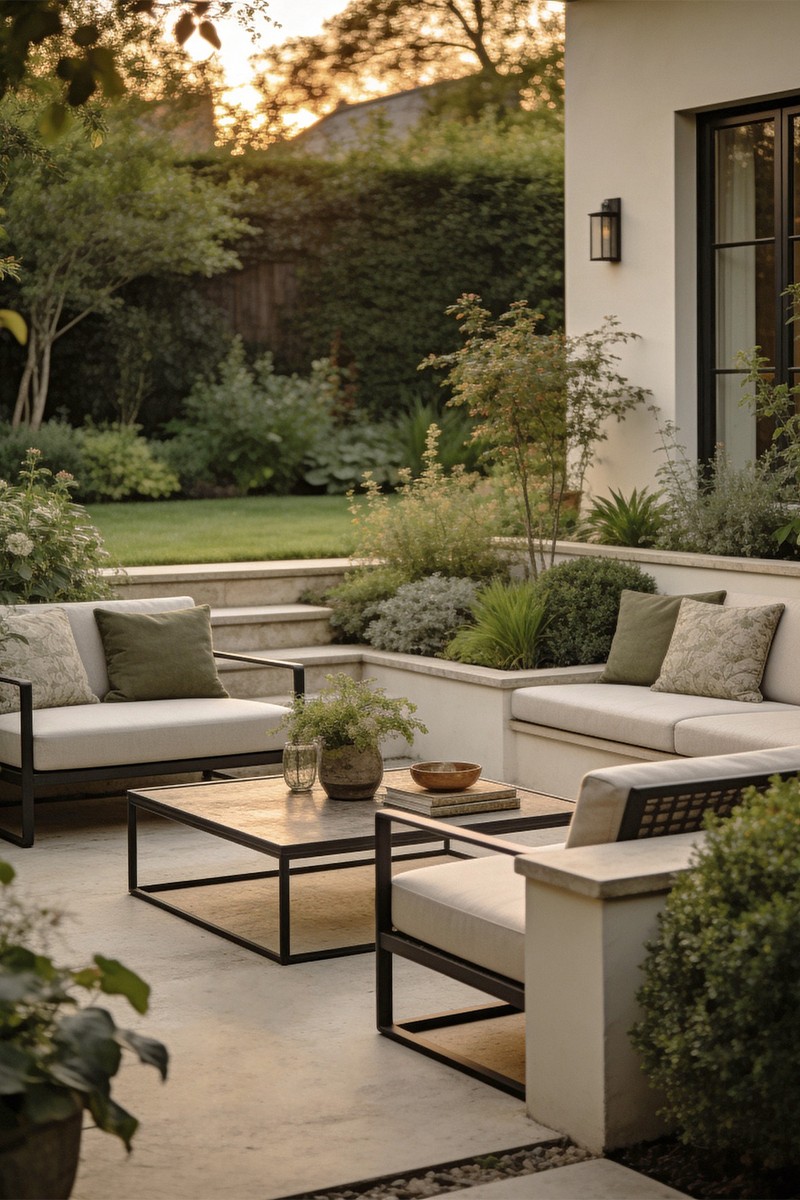
The architecture of this home set the tone immediately: pale render, dark steel windows, nothing fussy, so everything we suggested had to hold that same register. Evening light was central from the start – this particular family love to spend time outdoors after 6pm, so the space was always going to be designed for dusk as much as for midday.
We started with how the space would be used. A proper socialising terrace has to feel like a room, enclosed enough to draw people in, open enough that nobody feels trapped. The raised planting bed gives a soft boundary without any hard walling, and keeping a step up to the lawn means you don't read the whole garden at once. That sense of gradual reveal matters enormously on a smaller urban plot.
We choose limestone for everything horizontal. It does looks lovely in low light, and ages with intention rather than just deteriorating. The dark steel in the furniture was a direct echo of the window frames. I'm always looking to connect those quiet threads between the architecture and the landscape; without them, a garden can feel like it was specified separately from the house. We also design for year ten rather than year one, so durability is never a compromise.
Planting is layered – deliberately loose at the edges, more resolved at the centre. When the built elements are precise, the planting has to do the softening, but I don't like planting that looks like it's apologising for being there. Japanese maple for mid-height movement and real seasonal drama, ornamental grasses for texture and a bit of sound, lower evergreen mounding to hold the structure through winter when everything else retreats.
Our key design principle was restraint. A palette of limestone, dark steel, sage and warm white, used consistently from the hard landscaping right through to the cushions. The bilateral rhythm in the seating arrangement creates order without tipping into anything too formal. And proportion: everything is scaled to feel generous rather than empty.
Hay-Joung Hwang, THEGARDENISTS.CO.UK
The Minimalist Urban Courtyard
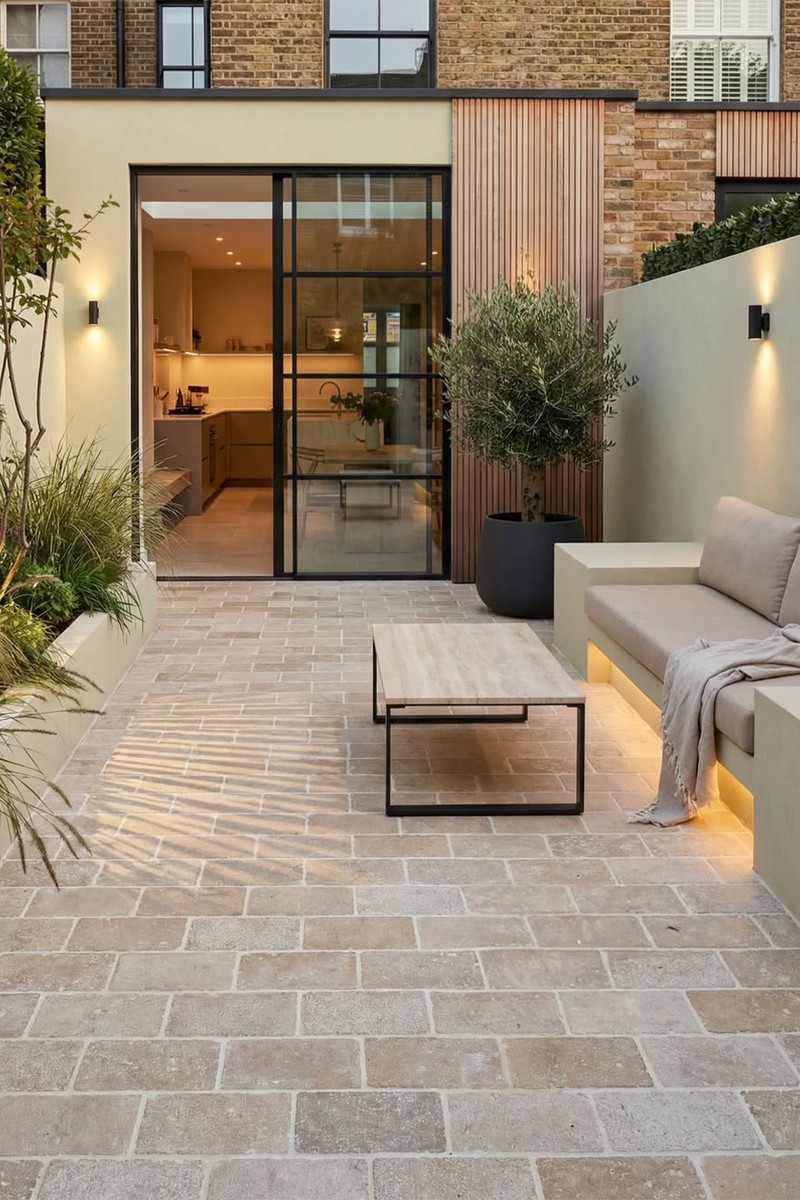
The main concept was to keep the garden design simple and not overfill. Because it’s quite narrow, we pushed everything to the edges and kept the middle as clear as possible so it doesn’t feel cramped. The seating runs along one side so you still have a proper place to sit without interrupting the flow through the space, and the planting is tucked around the sides to soften it without getting in the way.
We wanted it to feel in keeping with the house, so we worked with tones that already existed in the brick and softened them. We saw the paving at Ca’ Pietra’s London showroom and felt that it would work perfectly. The stone has a bit of variation in it, which stops it feeling flat, and the render is a warm neutral so it doesn’t feel too stark. The black metal frames give it a bit of structure and tie in with the doors.
We were quite restrained with planting on purpose. It’s a small space, so too much greenery would have made it feel busy. Instead, we focused on a few key plants that have a bit of shape and movement, like the grasses and the olive tree, so it still feels soft but not overdone.
Built-in elements made the most sense for the space. Loose furniture would have taken up more room and probably looked a bit cluttered. This way, everything feels part of the layout, and you get more usable seating without compromising the space.
Keeping everything aligned and uncluttered made a big difference. The continuous paving helps the space feel longer, and having the large doors at the end draws your eye through from the house into the courtyard. The lighting also helps in the evening, as it softens the edges rather than highlighting how narrow it is.
Abi Hulme, homeowner
The Seamless, Inside-Outside Space
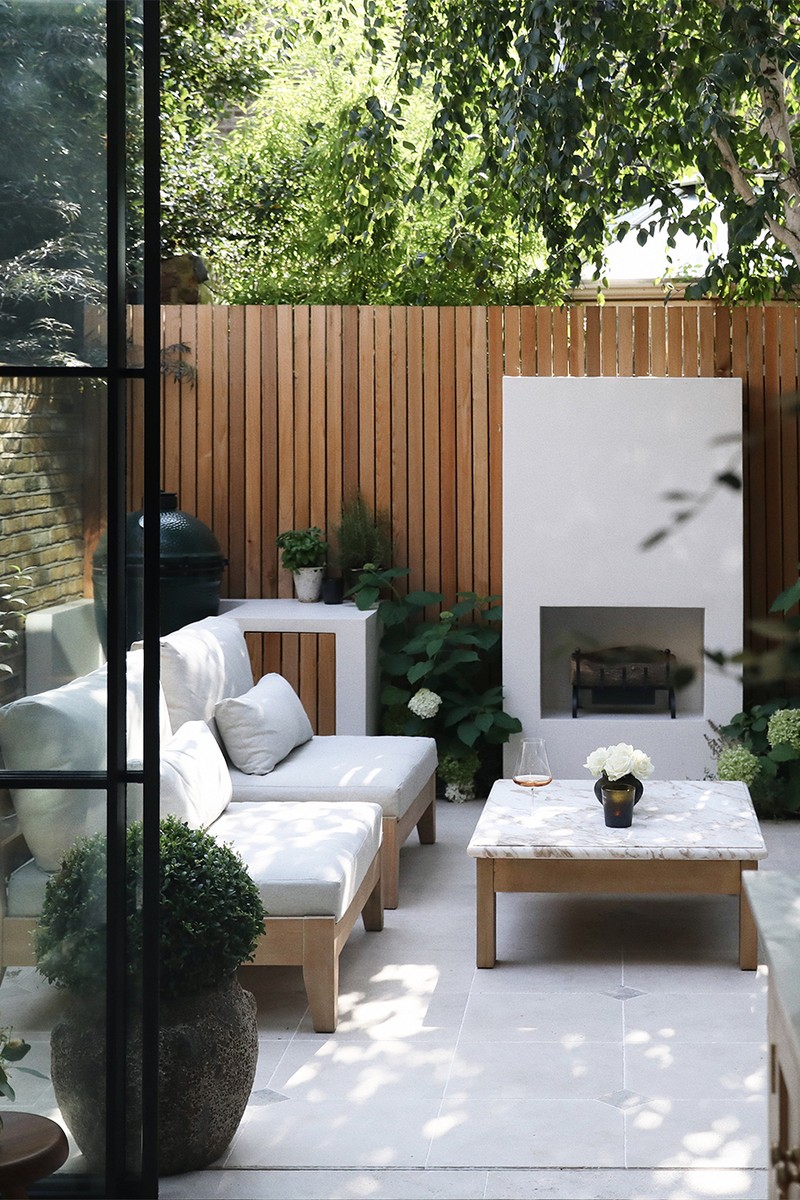
Our garden was always intended to feel like a natural extension of the house – not a separate space but an outdoor room that flows effortlessly from the kitchen. With space at a premium, every inch had to work hard, so we approached it with the same level of consideration as our interiors. Repetition plays an important role, from using the same finishes across key features like the fireplace and BBQ unit, to creating rhythm through the planting and lighting. We kept the palette restrained so everything feels considered and balanced. A strong focal point and a sense of symmetry help ground the space, making it feel calm, connected and easy to move through.
We found ourselves drawn to the relaxed elegance of Californian al fresco living and the warmth of a Nancy Meyers home – spaces that feel layered, inviting and quietly luxurious. It was about creating that ‘holiday at home’ feeling, where textures, materials and planting evolve over time.
There were a few non-negotiables that shaped the design. First, an infinity patio, allowing the flooring to run seamlessly from the kitchen into the garden, dissolving the boundary between inside and out. That visual continuity was key. Second, a strong focal point. For us, that became the fireplace. Something sculptural, but also functional. It anchors the space and naturally draws people together. We also wanted defined boundaries to create a sense of intimacy, and a balance of natural materials, marble, brick, cedar and plaster that mirror the palette inside the house. And finally, planting that felt soft and romantic. Nothing too rigid, just layered, billowing borders filled with lavender, rosemary, jasmine and roses to bring movement and scent.
Materiality was incredibly important to us, not just how things look now, but how they age. We chose a tumbled marble for the flooring, with soft pink and cream tones and natural pitting that gives it a timeworn, almost antique feel. It pairs well with the oak flooring inside, creating that seamless transition. The fireplace and BBQ unit were finished in Italian Pastellone plaster, colour-matched to our kitchen walls, which ties everything together. London stock brick and cedar fencing add warmth and texture, while bronze lighting introduces a soft glow in the evenings. For us, it was about choosing materials that feel honest, tactile and that will only get better with time.
Planting was all about balancing structure with softness. In a compact garden, we kept the framework clean, using clipped Ilex domes to anchor each bed and bring a sense of order. Around that, we layered in looser planting, nepeta, lavender and verbena to add movement and a more natural, romantic feel. The beds are designed to frame the space rather than interrupt it, keeping the centre open while still feeling enveloped in greenery. Scent was also key, with jasmine, rosemary and roses woven throughout.
Sarah-Louise Phelps, NO17HOUSE.COM
The Quintessential English Country Garden
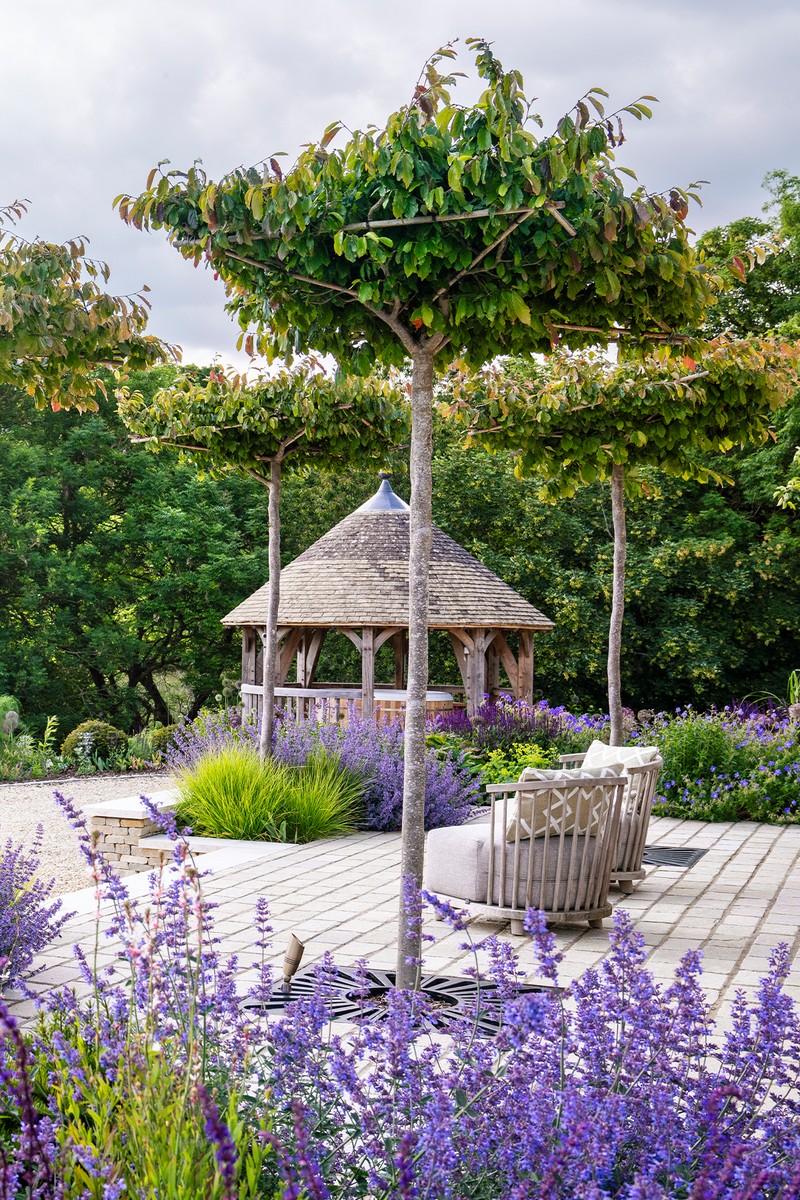
This garden is based in the Cotswolds. It’s on the site of an old stables and kennel so we wanted to honour both the classic materials of the area (think dry stone walling and buff stone) and the stable yard feel. The client wanted a multi-zone space to entertain and relax, so we included several different seating areas, each immersed in abundant planting so it didn't feel too hard.
A classic mistake is to install lots of paving without balancing it with the softness of planting – this can make a garden feel quite sterile, so generous planting borders were included throughout to keep it romantic and seasonal. The planting not only softens the space but acts as a division between the garden ‘rooms’ or zones. A beautiful oak structure was installed above a hot tub (pictured), which instantly made it feel more classic.
The garden is on a slope, so it lent itself to be redesigned on multiple levels. This is always welcome as level changes instantly divide the space into different zones and add interest that is harder to achieve in a flat space. Multi-stem and Parasol trees were the focal points of this garden, but the views are the real star, so the goal was to add depth and dimension rather than compete with it. The trick is to bring in these focal points in the foreground so you look through, without blocking.
It was really important to us that we use local Cotswold stone – this is used in all walling throughout the garden. Cobbles on the ground nod to the stable yard and keep things slightly more informal. Both will age beautifully. Limestone was used to reflect the limestone used in the house interiors, and the light fittings hark to the materials used indoors, so the house and garden feel like an extension of each other.
The client requested a purple, white and green scheme that would provide seasonal interest throughout the year. A structural base layer of Taxus Yew and grasses forms the backbone of the garden and bring structure and interest through the autumn and winter before handing over to spectacular cherry blossom trees in the spring and an abundance of spring bulbs. Then, the planting bursts into life in April and carries the garden through to the autumn in white, green and purple, with splashes of tangerine to act as a counterpoint. The garden is extremely aromatic too, with herbs, catmints, roses and jasmines which pump out scent in the heat of summer.
Planting blurs the edges, so any hard lines are softened. The balance of planting to hardscape is about 60/40 in favour of planting. As with all our designs, planting is repeated throughout to bring a sense of harmony and rhythm, and the materials are also repeated in various spaces so everything works as one.
Polly Wilkinson, STUDIOPOLLYANNA.CO.UK
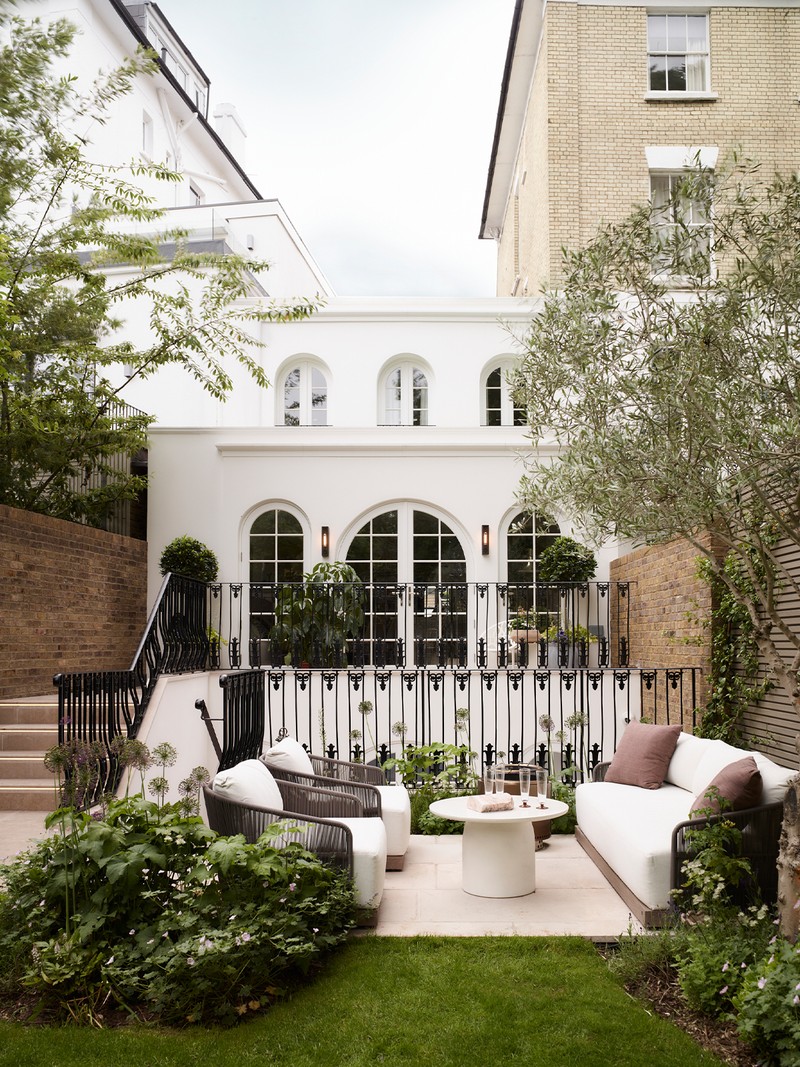
The Classically Elegant Garden
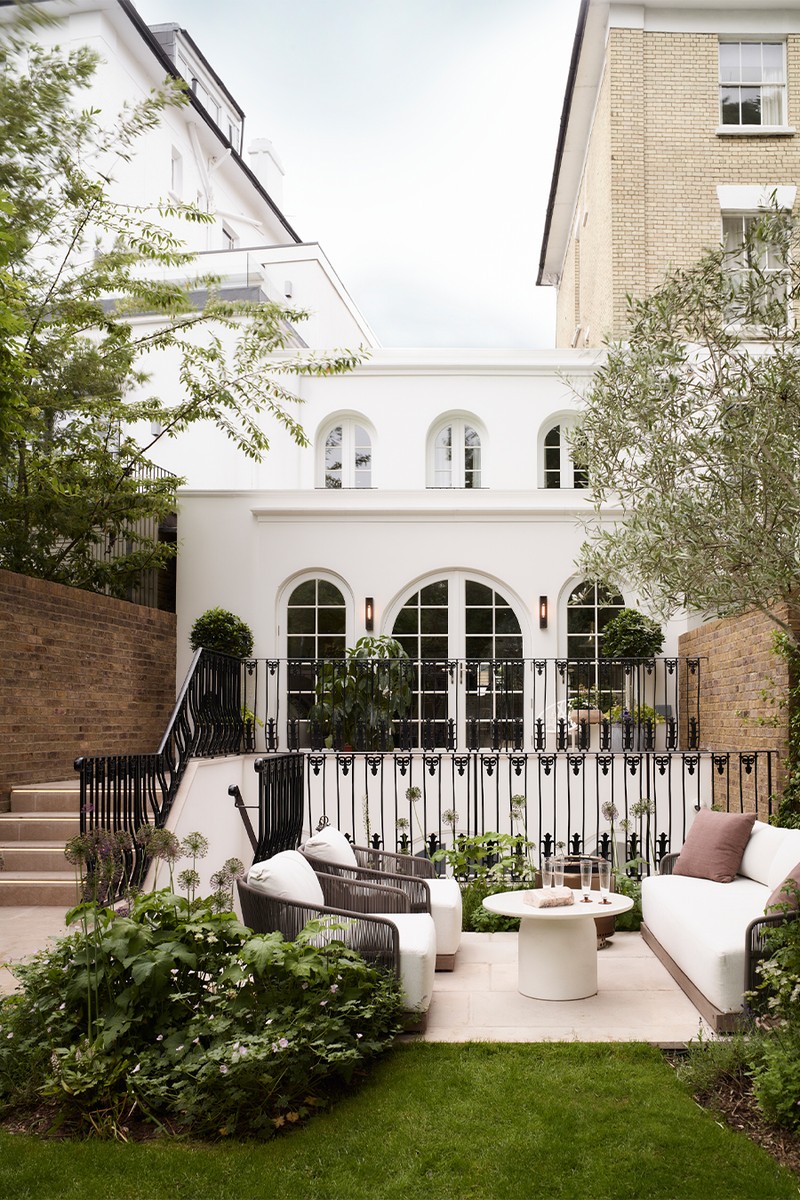
When we first visited the original house, it was sad how little space had been left for the garden. It had been heavily paved, with large concrete planters dominating visually. The first move was to reintroduce a sense of greenery and nature. From there, the design responded to the new classical language we developed for the rear façade of the house. We were aiming for something calm and ordered, but softened with gentle curves, and a planting layout with a clear sense of rhythm.
Our client likes to have family and friends over, and is a keen gardener herself, so the space needed to work for both. It also had to accommodate her child and the family dog, which meant avoiding any planting that could be harmful.
The layout was driven by the wedge-shaped site. A lot of the work was about quietly regularising that geometry through curved borders and consistent edges, and orientating the garden to make the most of the views from the ground floor rooms. The seating area moved several times during the design process. It was initially positioned further back but we found that bringing it closer to the house worked better, both practically and spatially. It allows for a stronger connection to the property and gives the best views back across the garden, without needing to walk across the lawn.
We mindfully chose a traditional palette. Natural limestone paving felt appropriate – something that will weather gently over time and sit comfortably with the architecture. For the fencing, we chose a timber-effect composite for durability and its softer, more natural appearance. The rest of the materials were defined by lush and verdant planting
Planting was key to softening the space. With boundary fences on all sides, there was a risk that the garden would feel enclosed or hard, so we focused on creating a sense of lushness which became a consistent reference point. It helped us stay focused on the overall atmosphere we were trying to achieve. We relied on symmetry where possible, alongside repetition and alignment, to bring a sense of order. The borders were also carefully shaped to disguise the irregular geometry of the site, so the garden reads as more composed and intentional.
Nancy Gouldstone, NANCYGOULDSTONE.COM
Or continue to comment as a Guest below
DISCLAIMER: We endeavour to always credit the correct original source of every image we use. If you think a credit may be incorrect, please contact us at info@sheerluxe.com.
/https%3A%2F%2Fsheerluxe.com%2Fsites%2Fsheerluxe%2Ffiles%2Fwebsite-images%2F2025%2F03%2Fsign-up-pop-up.jpg)