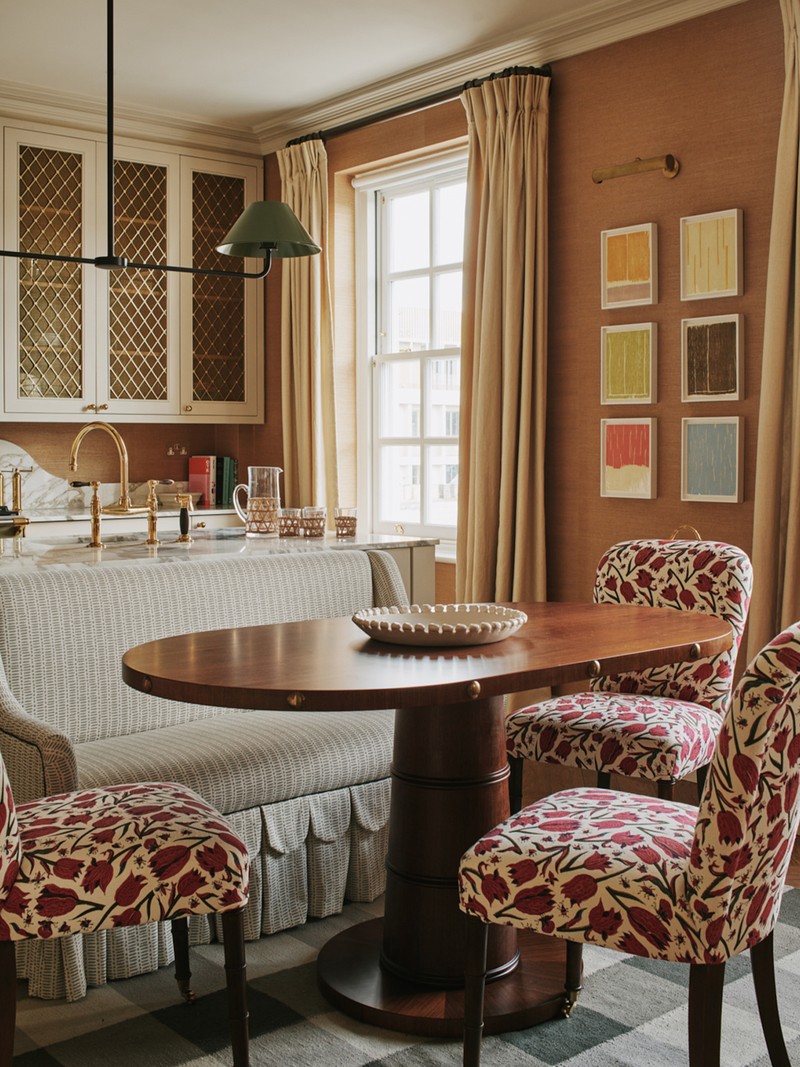
Interiors Trend Watch: Banquette Kitchen Islands
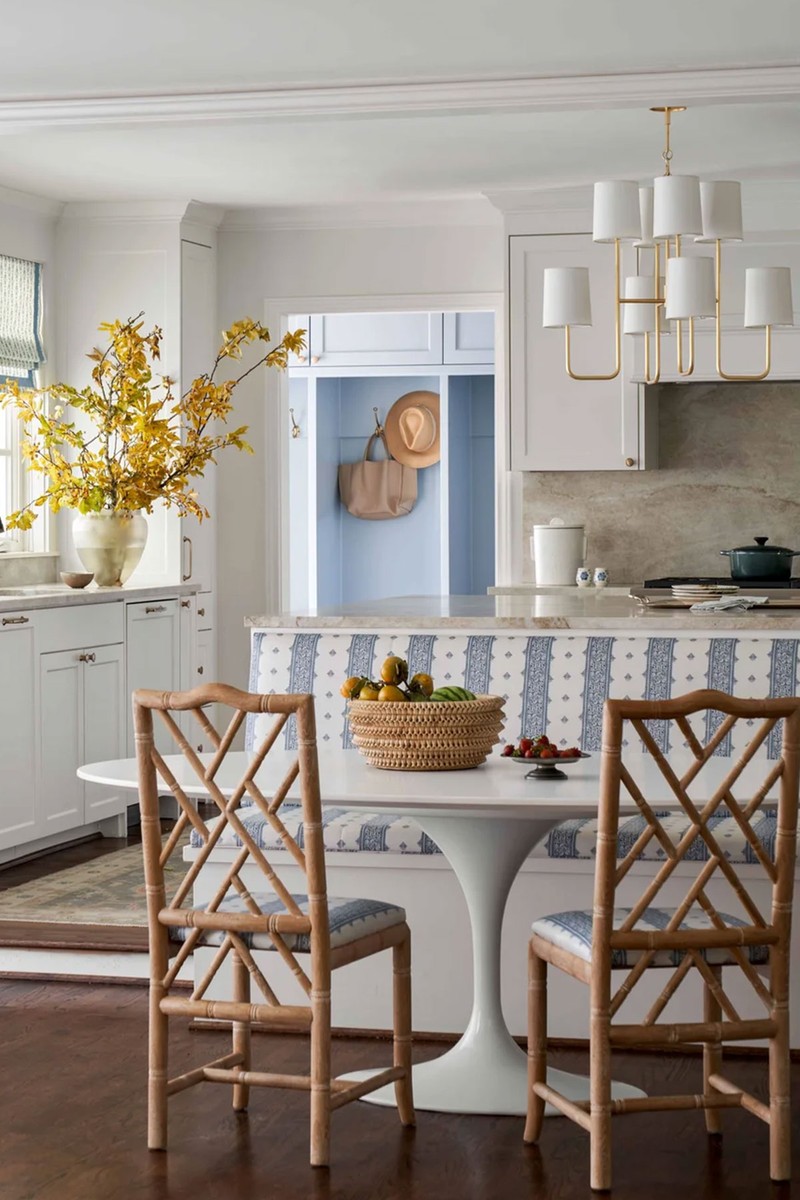
First, what are the key design principles to consider?
It should feel part of the architecture of the room. In an open-plan kitchen, dining and living space, a banquette helps define zones without interrupting the overall flow. Setting an upholstered bench against the back of the island establishes a clear boundary. It is also worth working with the room as it is. An awkward footprint or uneven angles can be used to shape the seating and give the space more character.
How do you ensure the proportions work without compromising on circulation space?
Proportion comes down to balance between function and movement. The island needs to be large enough to work as a practical surface while allowing space for seating behind. In tighter layouts, fixed seating is often more efficient than loose chairs, as it avoids the need for extra clearance. It is also worth considering the space either side of the banquette to allow access to slide in comfortably without being hindered by the table. It goes without saying that pedestal table legs remove the awkward shimmy around traditional table legs in each corner.
Which materials and finishes would you recommend?
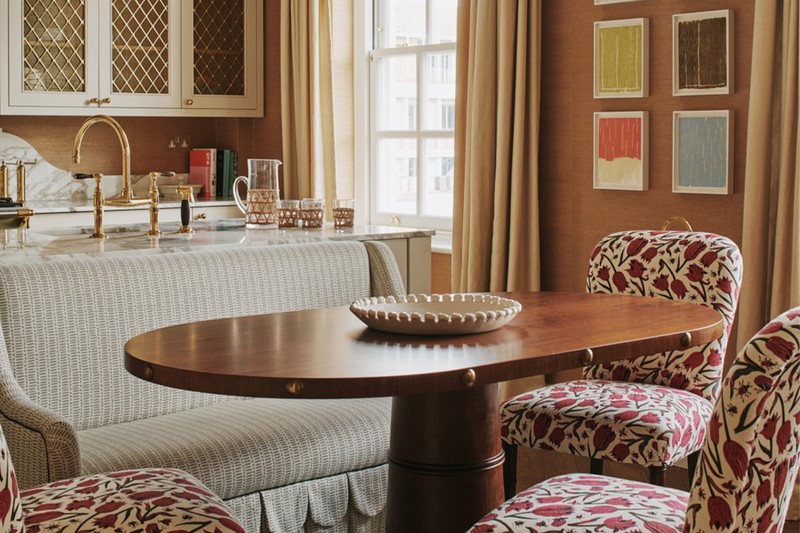
Cohesion tends to come from repetition and contrast used in equal measure. Harder materials on the island can be balanced by softer upholstery, while shared tones or finishes help link the two together. Timber, leather or a consistent colour palette can be carried across different elements in the room. Also, bringing in a secondary piece, such as a desk or joinery with a related finish, can reinforce that sense of continuity.
What should readers think about in terms of durability, fabric choice and maintenance?
The fabric needs to cope with daily use. Kitchens see constant traffic, along with spills and general wear, so durability and ease of cleaning are essential. Upholstery should be robust without losing comfort, as this is seating designed for extended use. Details such as darker tones or subtle pattern can help disguise marks over time, keeping the space looking considered rather than worn.
How can this style of seating maximise both functionality and sociability within a space?
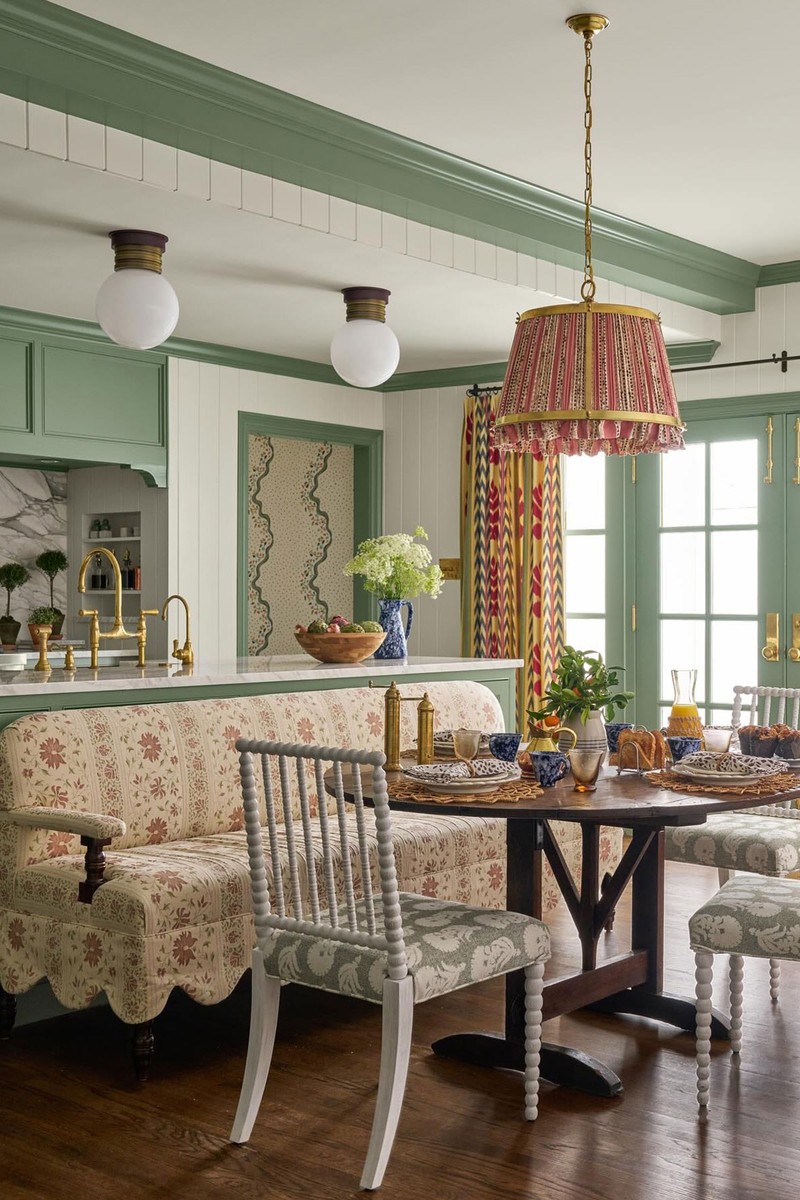
A banquette changes how a kitchen is used. It creates a place to sit that feels more relaxed than a standard dining set-up, encouraging people to stay longer. Positioned against an island, it allows cooking and socialising to happen side by side.
If you’re on a budget, what are some tips or smart compromises worth knowing?
Don’t compromise on the quality of fabric – it has to stand the test of time, so if you have small children or messy eaters, perhaps consider a leather for the seat and a more unforgiving fabric for the back of the banquette.
In smaller kitchens, a banquette can solve practical constraints. Fixing seating along one side of a counter or island extension reduces the need for clearance space around chairs. It also allows corners or underused areas to be brought into use. Keeping the design simple and focusing on proportion and placement can achieve the same effect without requiring a large footprint or extensive joinery.
Visit SALVESENGRAHAM.COM
Or continue to comment as a Guest below
DISCLAIMER: We endeavour to always credit the correct original source of every image we use. If you think a credit may be incorrect, please contact us at info@sheerluxe.com.
/https%3A%2F%2Fsheerluxe.com%2Fsites%2Fsheerluxe%2Ffiles%2Fwebsite-images%2F2025%2F03%2Fsign-up-pop-up.jpg)