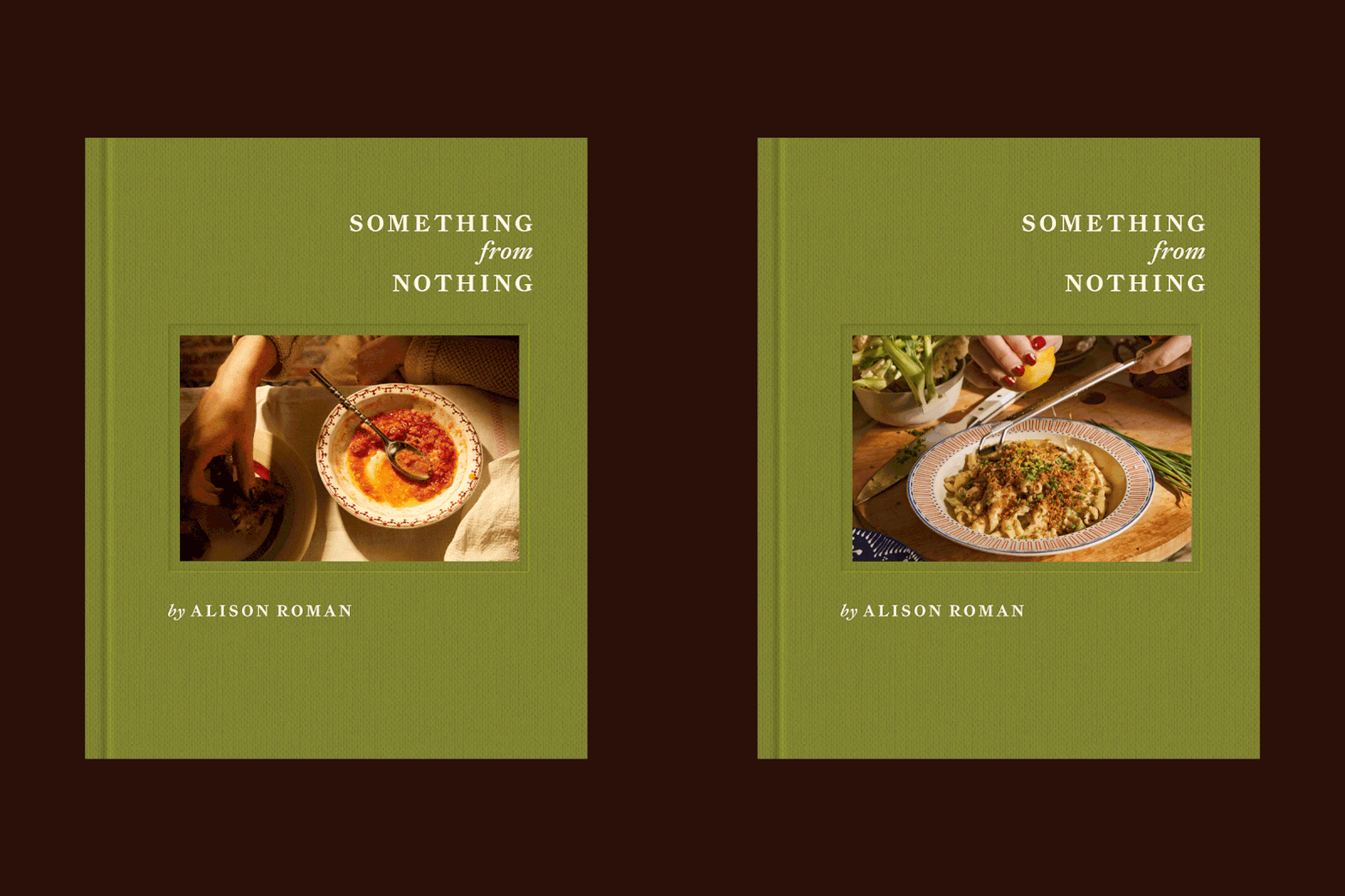
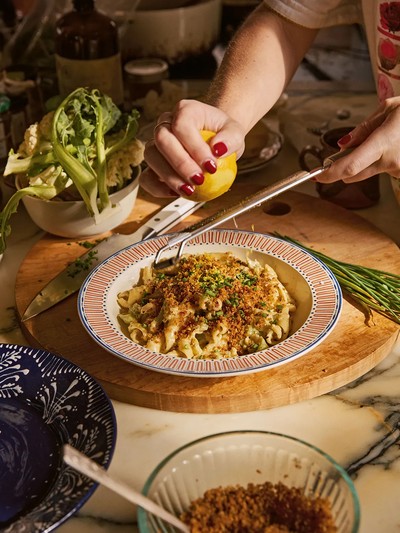
3 Winter-Ready Recipes From Alison Roman
I’m not a lazy cook, really, but I am obsessed with being productive and efficient, which makes me pretty frugal with both my ingredients and my time. I don’t soak my beans and I enjoy doing in two steps what’s usually done in five. I save the scraps of my vegetables to make soup to avoid going shopping and one of my favourite snacks on planet Earth is the softened, chicken fat–soaked celery leftover in the pot from making broth, because why waste perfectly good celery? Both as a cook and an eater, I’m turned off by needless complications, and as particular and fussy as I can be, my food remains quite the opposite.
Since my last book, I met, fell in love with, got married to and had a baby with a wonderful man. In his vows, he told me that his favourite nights at home were when we didn’t have time to go grocery shopping and I made something out of what we had in the pantry, because it was in those thrown-together moments that he got to see how my imagination worked. I cried very hard, of course – never had I considered that someone might interpret my affinity for practicality as creativity. Gorgeous meals come together easily with perfect produce and well-marbled meats, but nothing gives me more pleasure than rooting around the cans and tins of a dimly-lit kitchen and emerging with the best tomato soup of my life.
I feel both proud of and nervous to admit that this book could potentially be described as . . . adult. Mature, even. There’s a quiet confidence in recipes that have so few ingredients, take so little time and yet promise so much. What the recipes here lack in bells and whistles, they make up for in soul and deliciousness. Some are old classics I’ve reinterpreted (I add garlic to my carbonara and there’s no cheese in my caesar dressing), some are recipes that are classic to me (Caramelised Shallot Pasta is undeniably more famous than I am), some aren’t classic at all (yet) and all are easy to make with the help of a well-stocked pantry. Throughout, the complexity of the recipes stays low and the ingredients lists are minimal, all the while encouraging you to go off script, to adapt and make them your own. An extended love letter to simplicity, this book is about finding joy and satisfaction in the tiny miracles of cooking – all of the deliciousness that comes from making something from nothing.
Inspired? Here are three recipes to try yourself…
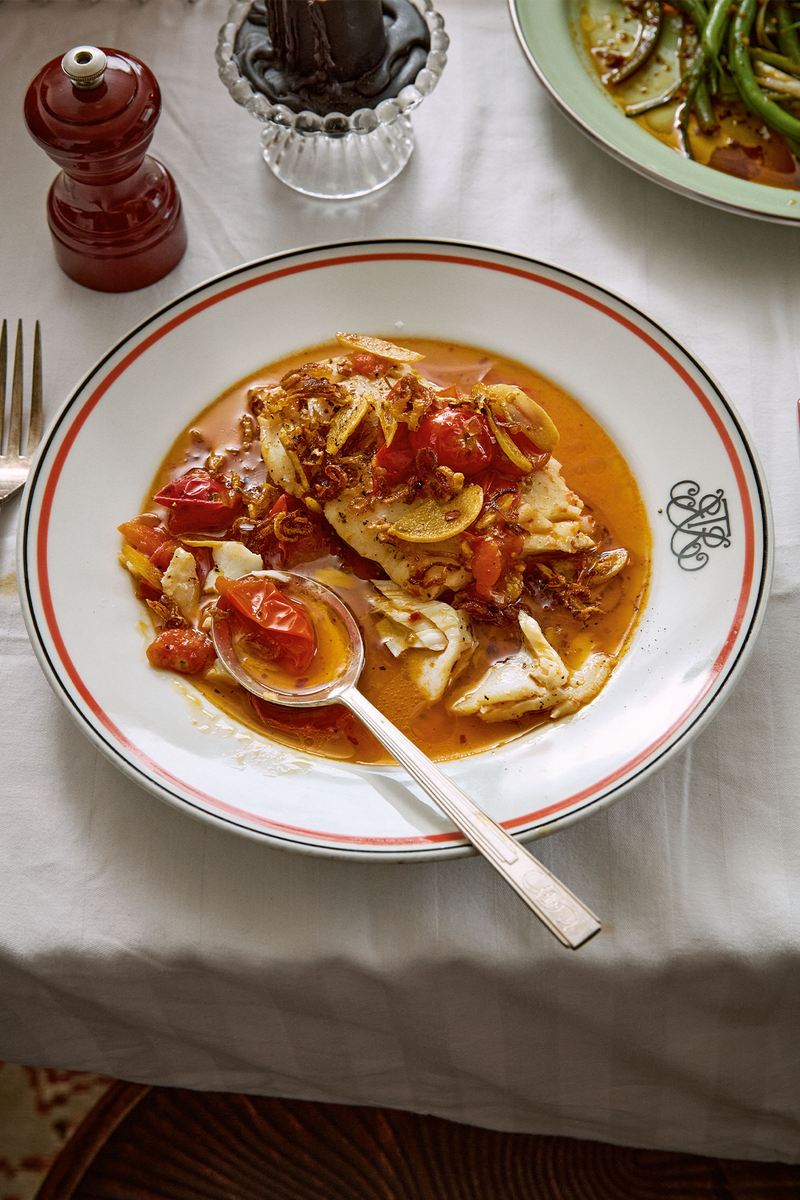
Tomato-Poached Fish With Crispy Chilli Oil
Poaching boneless, skinless, mild fish fillets in a flavourful, brothy sauce is not just my favourite way to cook fish but also the easiest method with the highest success rate among those who say ‘I’m afraid to cook fish.’ A ‘flavourful, brothy sauce’ can mean any number of things but I find the best, most crowd-pleasing one is a bright, spicy, sweet tomato number. It starts with the beginnings of a very basic chilli oil, fresh or tinned tomatoes and a healthy splash of fish sauce for added depth. The broth should be bold enough to season the fish as it gently cooks but not so punchy that you can’t drink it by the spoonful afterwards. While this could be turned into a sort of fish stew (cut your fish into bite-size pieces before cooking, and add prawns, clams or mussels), I would take advantage of this moment just to enjoy some fish on its own in a lovely little sauce.
Heat the olive oil in a large skillet over a medium-high heat. Add the garlic and shallot and cook, swirling the skillet constantly, until they start to toast and turn light golden brown, 2 minutes or so. Add the chilli flakes and swirl to toast for a few seconds. Remove from the heat and transfer the crispy garlic and shallots and all but 1 tablespoon of the oil to a small bowl (the garlic and shallots can sit in the oil – that’s fine).
Add the tomatoes to the skillet (if using tinned tomatoes, add them) and season with salt and pepper. Cook, tossing occasionally, until they burst and start to become saucy and jammy, 5-8 minutes. (Give tinned tomatoes closer to 10-12 minutes to take the tinned edge off.) Add the fish sauce and 360ml of water, swirling to release any of the bits stuck on the bottom of the skillet.
Cook until the sauce is slightly thickened but is still nice and brothy, 3-5 minutes. Season with salt and pepper.
Season the fish with salt and pepper and gently lay the pieces in the brothy tomatoes. Cover the skillet (if your skillet has a lid, use that – if not, use a baking tray) and cook until the fish is opaque and just cooked through, 4-6 minutes (slightly longer for a thicker piece of fish, like halibut).
To serve, transfer the fish and brothy tomatoes to a large shallow bowl or divide among four bowls. Drizzle with more olive oil and the crispy shallots and garlic. Top with coriander and serve with limes for squeezing.
Serve with a bowl of perfectly cooked rice, orzo or pearl couscous. Warmed corn tortillas or toasted sourdough. A very cold glass of white wine.
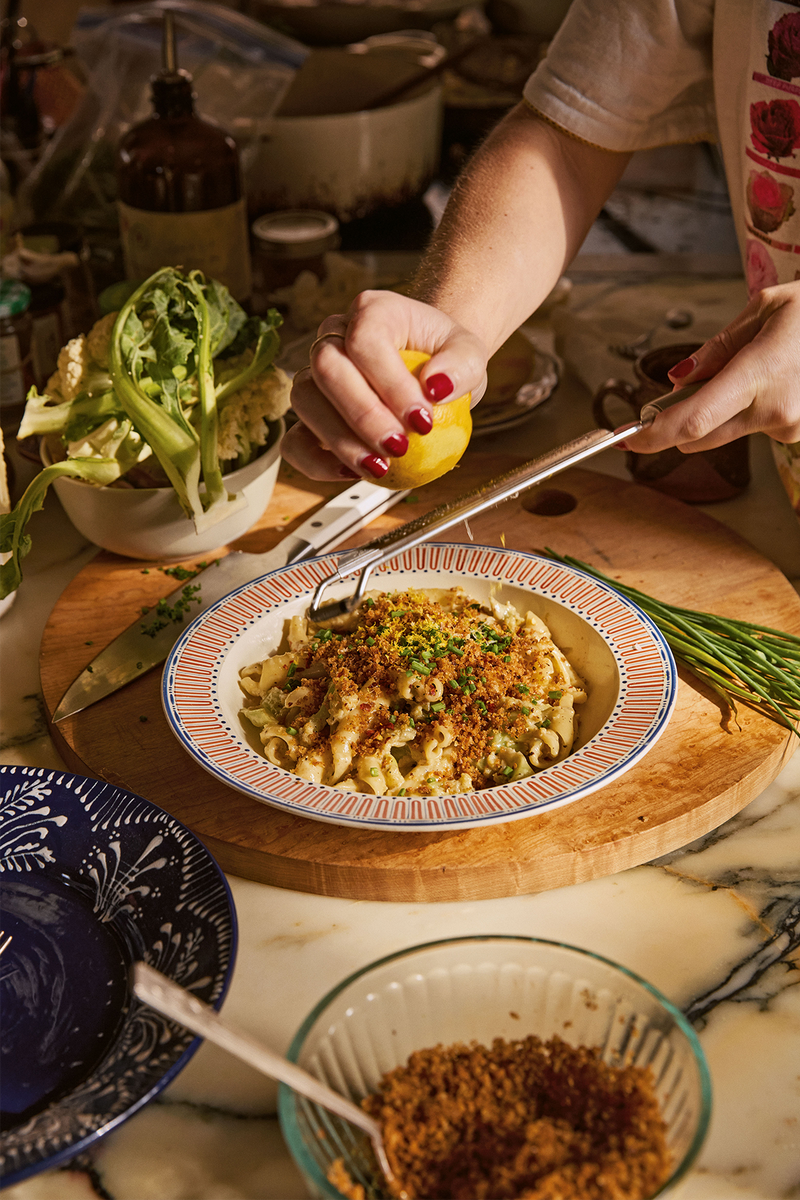
Creamy Cauliflower Pasta With Pecorino Breadcrumbs
This recipe is wonderful for many reasons: a whole head of cauliflower caramelises in a pan before being simmered with cream, black pepper, pecorino cheese and a bit of lemon zest, breaking down into a special (and yes, decadent) sauce to coat the pasta shape of your choosing. It’s the pecorino breadcrumbs we’re here for and that’s okay – they’re magnificent. A crunchy, oily, salty vehicle for more cheese and much-needed texture, they’re the ideal finish to a saucy pasta such as this but don’t stop there. Use them as tiny croutons to finish a caesar salad or scatter them over the top of a pot of saucy beans. Once they’re in your life, you’ll never want to be without them.
Heat 3 tablespoons of the olive oil in a large skillet over a medium heat. Add the breadcrumbs and season with salt and pepper. Stir to coat evenly in the oil and cook, tossing occasionally, until they’re evenly toasted and golden brown, 4-6 minutes. Add half of the pecorino and toss to coat, letting the cheese melt and clump among the breadcrumbs (think granola-like clusters). Remove from the heat and transfer to a small bowl or plate; set aside.
Meanwhile, bring a large pot of salted water to the boil. Cook the pasta until al dente; save about 250ml of pasta water, then drain.
Wipe out any crumbs from the skillet and heat the remaining 3 tablespoons olive oil over a medium heat. Add the shallot and cauliflower and season with salt and plenty of pepper. Cook, tossing occasionally, until the cauliflower has completely softened and both the cauliflower and shallots are beginning to caramelise and brown, 12-15 minutes.
Add the cream and lemon zest and bring to a simmer, then let the cream reduce and thicken, 2-4 minutes. Season with salt and plenty of pepper.
Add the pasta to the cauliflower along with the remaining pecorino and 175ml of the pasta water. Cook, tossing to coat the pasta and thicken the sauce, until it’s thick and glossy and almost resembles macaroni and cheese, adding more pasta water by the tablespoon as needed, 4-6 minutes.
Remove from the heat. Divide the pasta among bowls and top with pecorino breadcrumbs, chives, more lemon zest, chilli flakes (if using) and more cheese if you like.
Serve with: Like all heavier, creamier pastas, this is especially nice with a brightly dressed leafy, herby salad.
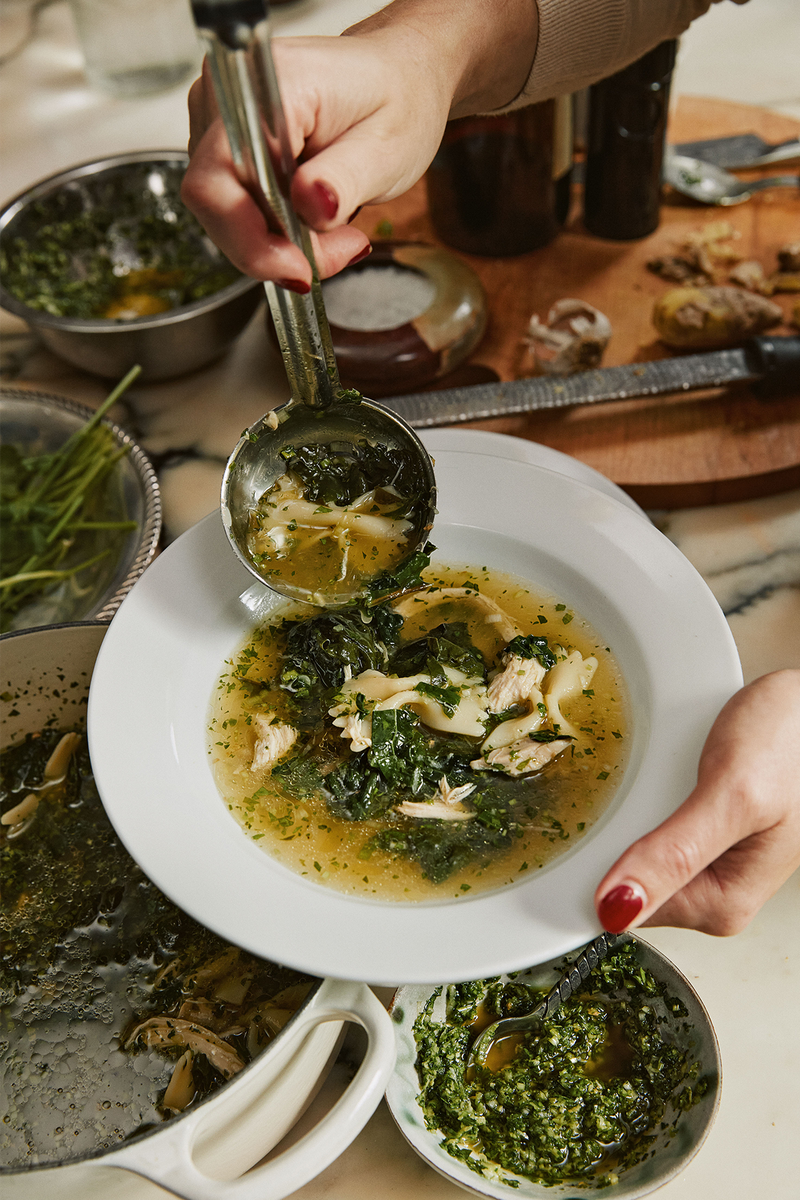
Pork Noodle Soup with Parmesan & Broccoli Rabe
When I’m not feeling well, I want to combine the things that make me feel best: chicken noodle soup and lots of ginger and greens. This soup does that, heavy on both the ginger and the greens, and yes… it heals me. I like the noodles here to either be very large, behaving almost like a dumpling (an excellent use for those oft-maligned bow ties), or something very small that can crowd onto your spoon (ditalini, fregola or cooked rice). As for the greens (kale, Swiss chard, spinach), you really want them to cook down in the soup, going from bright green to almost olive green in colour and taking on the softened texture of braised or stewed greens. This way, they almost melt into the broth, becoming the most tender, sweet versions of themselves. Finally, the ginger – spicy and very much alive – gets added both to simmer in the broth and to finish on top, keeping the soup perky and restorative. If this doesn’t heal you, I don’t know what will.
Combine the herbs, spring onions, ginger, garlic, fish sauce and olive oil in a small bowl. Season with salt, pepper and more fish sauce if you want; set aside.
Heat the stock in a large pot and add the leafy greens and half of the herb-ginger mixture. Bring to a simmer and season with salt and pepper. Simmer gently until the broth is very gingery and the greens have gone from perky and bright green to completely tender and dark green (looking more like braised than blanched greens), 15-20 minutes.
Meanwhile, cook the pasta in a pot of salted water until al dente; drain and add the pasta and chicken (if using) to the broth when it’s ready, simmering for a few minutes to finish cooking. (Add the cooked rice here, if going that route.)
Ladle the soup into bowls and top each with the remaining herb-ginger mixture. Squeeze over lots of lime or lemon.
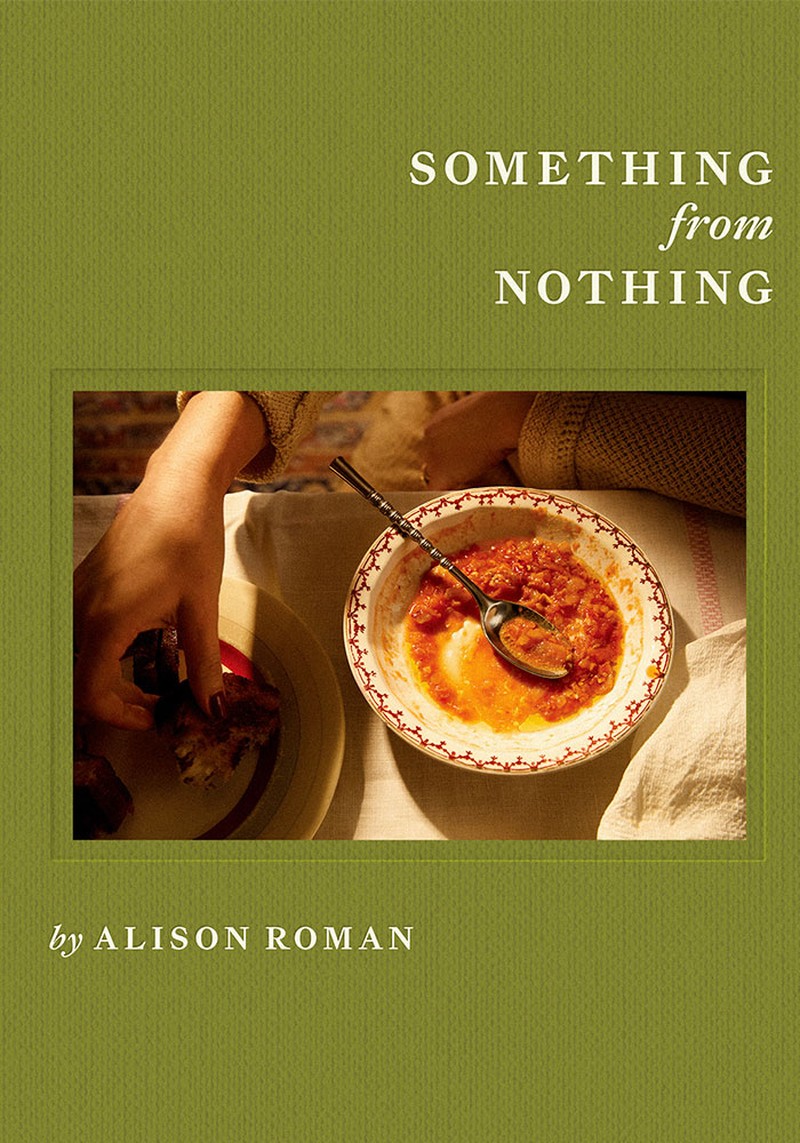
Extracted from Something From Nothing by Alison Roman (Quadrille, £27); photography by Chris Bernabeo.
Visit AMAZON.CO.UK
Or continue to comment as a Guest below
DISCLAIMER: We endeavour to always credit the correct original source of every image we use. If you think a credit may be incorrect, please contact us at info@sheerluxe.com.
/https%3A%2F%2Fsheerluxe.com%2Fsites%2Fsheerluxe%2Ffiles%2Fwebsite-images%2F2025%2F03%2Fsign-up-pop-up.jpg)