How To Feel More In Control With Endometriosis
Stef Williams
Fitness Expert & Founder of WeGLOW
I didn’t realise how much pain I’d normalised. Looking back, the first signs were there in my late teens and early 20s. I was experiencing pain that didn’t feel typical but I kept it to myself. I felt embarrassed and didn’t want to seem dramatic. It wasn’t until it started affecting my everyday life – training, work, even simple plans – that I pushed to have it properly investigated.
I’d seen GPs before but often left feeling dismissed. Eventually, I went private and saw a gynaecologist. That’s when I was diagnosed with endometriosis – something I’d never even heard of at the time. In hindsight, the symptoms had started years earlier. I just didn’t have the education to know they weren’t normal. I’d also been put on contraception at 14 while playing professional sport so I wouldn’t have periods. I didn’t bleed for years. Looking back, that probably masked things and made it harder to recognise patterns in my body.
It's not just a ‘bad period’. One of the biggest misconceptions is that endometriosis is only about your cycle. I didn’t even have periods for years and I was still in pain. At its worst, I’d get pain walking down the street or sitting at home. It could stop me completely. The fatigue was just as challenging. It wasn’t just tiredness – it was a full-body heaviness that made everything feel harder. My skin would flare, my energy would crash and there were times I felt faint or physically sick from the pain. Because you can’t see it, people often underestimate it.
Surgery was important, but so was changing how I lived. I’ve had two operations, and they’ve been a key part of my journey. A few years after my first surgery, doctors went back in to remove fibroids and found no sign of endometriosis. That felt huge. Alongside surgery, I completely changed how I train. I used to lift very heavy and push through inflammation. Now I take a hybrid approach: strength training combined with walking and Pilates. I focus on movement that supports me rather than exhausts me.
Nutrition has been equally impactful. Through trial and error, I worked out which foods left me feeling inflamed. I prioritise whole foods, protein and fibre, and I’m mindful about refined sugar. I used to get stuck in a fatigue cycle – exhausted, reaching for sugar, crashing, then feeling worse. Eating more consistently has stabilised my energy in ways I didn’t expect.
Follow @STEF.WILLIAMS
Hannah Alderson
Nutritionist & Hormone Specialist
I was told it was trapped wind – but it was stage four endometriosis. Before I had the language for it, I knew something wasn’t right. I had a copper coil at the time and assumed the sharp, scraping pain was because of that. I also experienced pain during sex, extreme fatigue and a constant wired-but-tired feeling. As symptoms escalated and I began cancelling plans, I sought help but was told repeatedly that I ‘couldn’t possibly’ have endometriosis. When I eventually went private, I was diagnosed with stage four disease and needed surgery. Being dismissed creates deep self-doubt. You start questioning your own body.
It affects more than your cycle. Endometriosis is inflammatory, immune-driven and oestrogen-dependent. It’s not confined to the womb. It can affect the bowel, bladder and beyond. It also influences fatigue, digestion, mood and stress resilience.
Surgery was life-changing. As a nutritionist, I say this clearly – surgery has been the most positively impactful treatment for me. Endometriosis cannot be cured by diet alone. Integrated medicine is key. Surgery and, for me, localised progesterone via the Mirena coil have been life-changing. Alongside that, regulating my stress response changed everything. Elevated cortisol drives inflammation, increases pain sensitivity and destabilises blood sugar. In my 20s, I lived on high-intensity exercise and restrictive diets. Shifting towards consistent nourishment, recovery and nervous system support created a foundation that allowed me to keep symptoms at bay for a decade. Supporting gut and liver health has also been central. Because endometriosis is oestrogen-dependent, helping the body clear excess oestrogen is critical.
Blood sugar balance is non-negotiable. Every meal includes protein, healthy fats, fibre and colour. I prioritise omega-3-rich foods, leafy greens, berries and olive oil, and I minimise ultra-processed foods and excessive caffeine. High-quality curcumin, omega-3 and magnesium have supported me, as has targeted gut support after antibiotics. Breathwork, dancing and rebounding help regulate my nervous system. None of these are quick fixes but together they reduce the overall inflammatory load.
Rest is strategic. I swap structured workouts for gentle walks outdoors, which feel supportive rather than draining. I lean into warm, easy-to-digest meals like soups or stews, and I make sure I’m eating regularly to keep my blood sugar steady. The biggest internal shift has been removing guilt from rest. We’re conditioned to push through discomfort and carry on regardless. But with endometriosis, pushing through often prolongs the flare. Rest isn’t indulgent – it’s strategic and will help your symptoms settle faster.
Visit HANNAHALDERSON.COM
Sophie Richards
Author & Endometriosis Campaigner
From the start, my periods were heavy and intense. I’d be doubled over every month, rearranging plans and assuming everyone else must be coping better. It felt like a corkscrew twisting in my stomach – and yet I accepted it. What I didn’t understand is that while discomfort can be normal, pain that stops you functioning isn’t. I also didn’t realise that fatigue, acne and brain fog could be connected to my cycle. No one had ever explained that hormones influence the entire body.
After I was diagnosed, I went into problem-solving mode. I had multiple surgeries and relied on medication. For many women, those interventions are not just helpful but life-changing, and I’m incredibly grateful that they exist. But for me, the improvement wasn’t lasting. I still felt like I was constantly firefighting symptoms rather than experiencing any real stability. There was always a sense that another flare-up was around the corner. It was only when I shifted my focus away from trying to ‘fix’ endometriosis and towards supporting my body more broadly that things began to change.
Food was the foundation. I didn’t think my diet was unhealthy before. I was choosing foods marketed as high-protein or high-fibre, but many were still heavily processed. Stripping things back to whole foods – meat, fish, fruit, vegetables, nuts, seeds, grains and legumes – created a noticeable difference over time.
I also began prioritising at least 30g of protein at each meal. That single adjustment stabilised my blood sugar, which in turn stabilised my energy and mood. I stopped skipping breakfast and moved away from fasting, because I realised that under-fuelling was adding another layer of stress to an already inflamed system.
My training and sleep had to change, too. I moved away from high-intensity interval training. Instead, I now prioritise moderate strength training a few times a week and Pilates. I still train consistently but I ask myself whether the session is supporting me or draining me. That mindset shift alone has been transformative. Sleep is also non-negotiable. When my sleep is disrupted, my pain threshold drops, my mood shifts and my energy disappears. I aim for consistent bedtimes, limit screens in the evening and build in time to properly wind down.
Supplements have helped. Magnesium was one of the first supplements that made a tangible difference, particularly for constipation and stress regulation. I use a broad-spectrum magnesium containing different forms rather than relying on just one. Omega-3 has been another long-term staple because of its anti-inflammatory properties, and probiotics have supported my gut health – something I now understand plays a much bigger role in hormone balance than I once realised. During winter months, I also supplement vitamin D, especially living somewhere with limited sunlight.
I still live with endometriosis but it’s under control. For nearly a decade, I believed that endometriosis automatically meant lifelong, unmanageable pain. That was simply the reality I thought I had to accept. What I understand now is that while the condition itself is chronic, the severity of symptoms can shift. There is a difference between having endometriosis and having unmanaged inflammation. While I still have the condition, I no longer live in the same level of pain I once did – and that distinction feels important.
Follow @SOPHIE.RICHARDS
Within the SheerLuxe Community, women are also sharing the small shifts that have made a difference. Here, they share their insights…
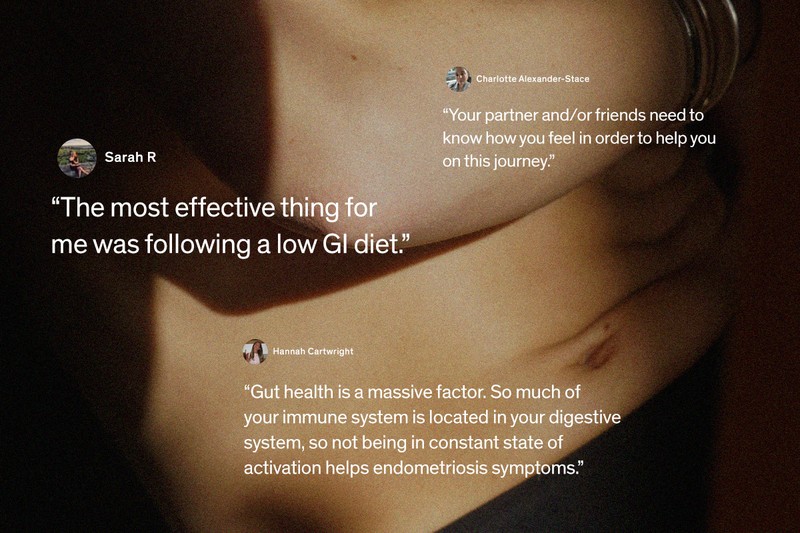
“After years of suffering, one of the most important things I learned is to ask for empathy and support from loved ones. Doctors are likely to ignore you, diagnosis takes years, the pain can be extreme, and it can feel lonely. Talk to your partner, friends and colleagues – you may need support during a flare-up, so it’s worth having an uncomfortable conversation so they know how to help.”
“If your GP is ignoring you, look up a hospital with an endo department. If you’re in London, UCLH is the best by far. Turn up at A&E and push your way through to see a specialist. I did this and it changed my life.”
“Therapy is worth exploring. Research suggests up to 99% of women with endometriosis experience depression and up to 88% struggle with anxiety. When you think about what it’s like to live with ongoing pain and feel dismissed by doctors, those numbers make sense. It deserves to be taken seriously.”

DISCLAIMER: Features published by SheerLuxe are not intended to treat, diagnose, cure or prevent any disease. Always seek the advice of your GP or another qualified healthcare provider for any questions you have regarding a medical condition, and before undertaking any diet, exercise or other health-related programme.
Or continue to comment as a Guest below
DISCLAIMER: We endeavour to always credit the correct original source of every image we use. If you think a credit may be incorrect, please contact us at info@sheerluxe.com.
/https%3A%2F%2Fsheerluxe.com%2Fsites%2Fsheerluxe%2Ffiles%2Fwebsite-images%2F2025%2F03%2Fsign-up-pop-up.jpg)