Vibration Plates: Fitness Hack Or Fad?
What They Do
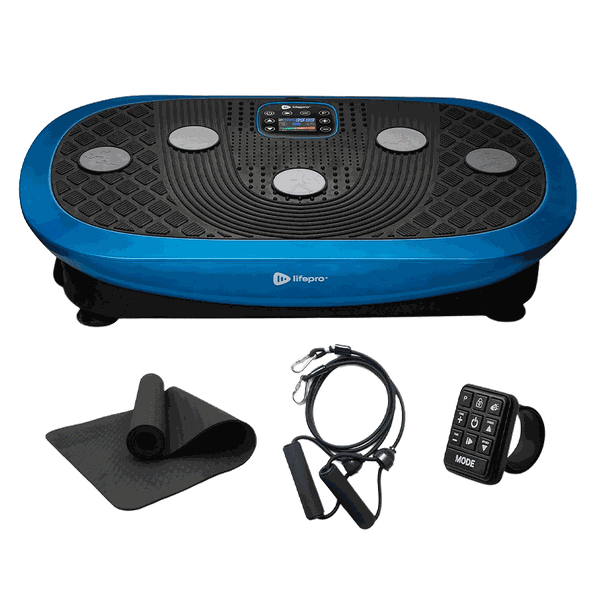
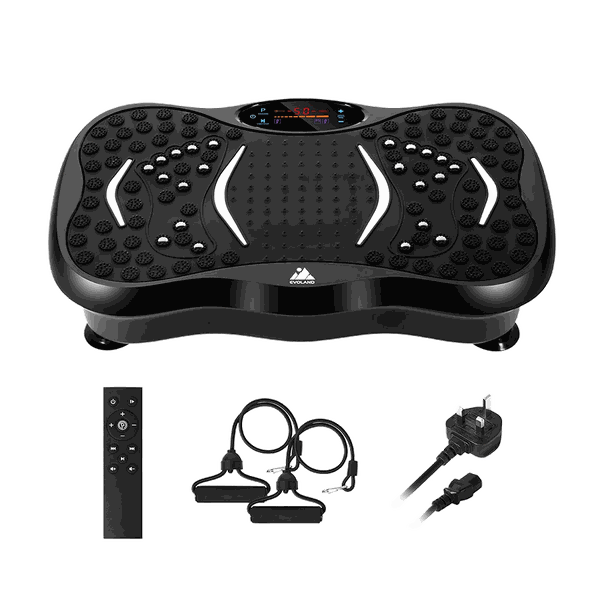
At their simplest, vibration plates are exactly what they sound like – a platform that vibrates while you stand, sit or move on it. But while it might look passive, your body is doing more than you think. “Muscles can contract 20 to 50 times a second depending on the setting,” says nutritional therapist Phoebe Liebling. “That increases blood flow to tissues and stimulates the movement of lymph straight away.”
“Those small, rapid vibrations make your muscles contract many times per second,” adds Florence Penny, consultant musculoskeletal physiotherapist and founder of Flow Physio London. It’s not something you consciously control – rather, your body is constantly trying to stabilise itself. Nutritionist Laura Jennings describes it as a kind of internal balancing act. “Your muscles are repeatedly contracting and relaxing in response to the movement,” she explains. “Even if you’re standing still, your body is working to keep you steady.” This response – known as the tonic vibration reflex – is what underpins most of the benefits. You’re not exercising in the traditional sense, but your muscles are being activated in a subtle, continuous way. How you use the plate matters, too. Faster settings tend to feel more intense and stability-focused, while slower ones create more of a rolling, wave-like motion through the body – often linked to that light, post-lymphatic-drainage feeling people notice afterwards. And while it might not feel like a workout, your core, glutes and pelvic floor are quietly switching on in the background.
Why They’re Back
Wellness today is no longer just about pushing harder – the focus now is on recovery, longevity and finding ways to support your body that fit into a busy day. Vibration plates slot neatly into that space – they’re low-impact, time-efficient and easy to use at home. “We’re seeing a real drive towards health optimisation, with recovery being a big focus,” says Florence. “Lymphatic drainage is having a moment, and vibration plates offer an at-home method with very little effort.” They also tap into the appeal of doing something that feels beneficial, without committing to a full workout. “They tap into the idea that you can stimulate muscles and circulation without traditional exercise,” says Laura. Add in the rise of home fitness and social media visibility, and it’s easy to see why they’re back in the conversation, says Phoebe. “People are time-poor,” she says, “and they want tools that tick multiple boxes, which is exactly where vibration plates come in.”
What The Benefits Are
Used well, vibration plates can be a helpful addition to your routine – just not in the way they’re often sold. Think of them less as a transformation tool, and more as something that enhances how your body feels day to day. After a session, most people notice a similar effect – legs that feel lighter, muscles that feel more ‘awake’, and a feeling of having done something, without the intensity of a full workout. A lot of that comes down to circulation and muscle activation. “A vibration plate can support muscle activation and improve balance,” says Laura. In practice, that can mean better body awareness, enhanced stability, and less of that sluggish, desk-bound feeling. They’re also closely linked to lymphatic drainage. The gentle, repetitive vibrations can help encourage fluid movement, which is why some people notice reduced puffiness or a feeling of lightness afterwards. “Because the lymphatic system doesn’t have a pump, it relies on muscle contraction to move fluid,” Phoebe explains. “So, anything that increases that activity can support the process.”
They can also come into their own during lower-energy phases – when you’re getting back into exercise, feeling run down, or just don’t have the capacity for something more intense. In that sense, they offer a way to keep your body ticking over without adding stress. What vibration plates are not, however, is a shortcut. “They do not replace exercise, sleep, hydration or good nutrition,” says Florence. And if your goal is visible muscle tone or fat loss, this isn’t the tool that will get you there on its own. “They support the things that do,” says Phoebe, “but they’re not the main driver.”
Who They’re Best For
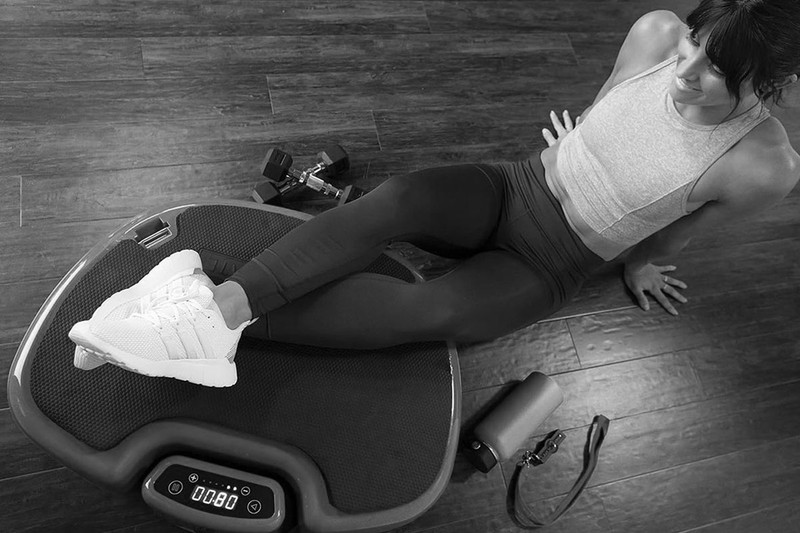
For some, they’re more than just a nice extra. In older or more sedentary groups, they can play a genuinely useful role in supporting balance, strength and bone health, especially when high-impact or heavy training isn’t realistic. For everyone else, it’s a bit more nuanced. If you’re in your 20s, 30s or 40s, think of a vibration plate as a support act rather than the main event. If you sit at a desk all day, travel often or regularly find yourself thinking “I should probably move more”, they’re an easy way to bridge that gap. They’re also a smart option if you’re easing back into exercise, recovering from injury or looking for something gentle but effective during postpartum recovery. “A vibration plate allows people to access the benefits of movement when they’re stressed or low on energy,” Phoebe notes, “without pushing the body into a more demanding state.”
If you’re already consistent with strength training and moving regularly, their role shifts again. At that point, they’re less about results and more about support – something you might use to aid recovery, improve body awareness or add a bit of variety to your routine. “A vibration plate is more of a ‘nice to have’,” Laura says, rather than something essential.
How To Use One
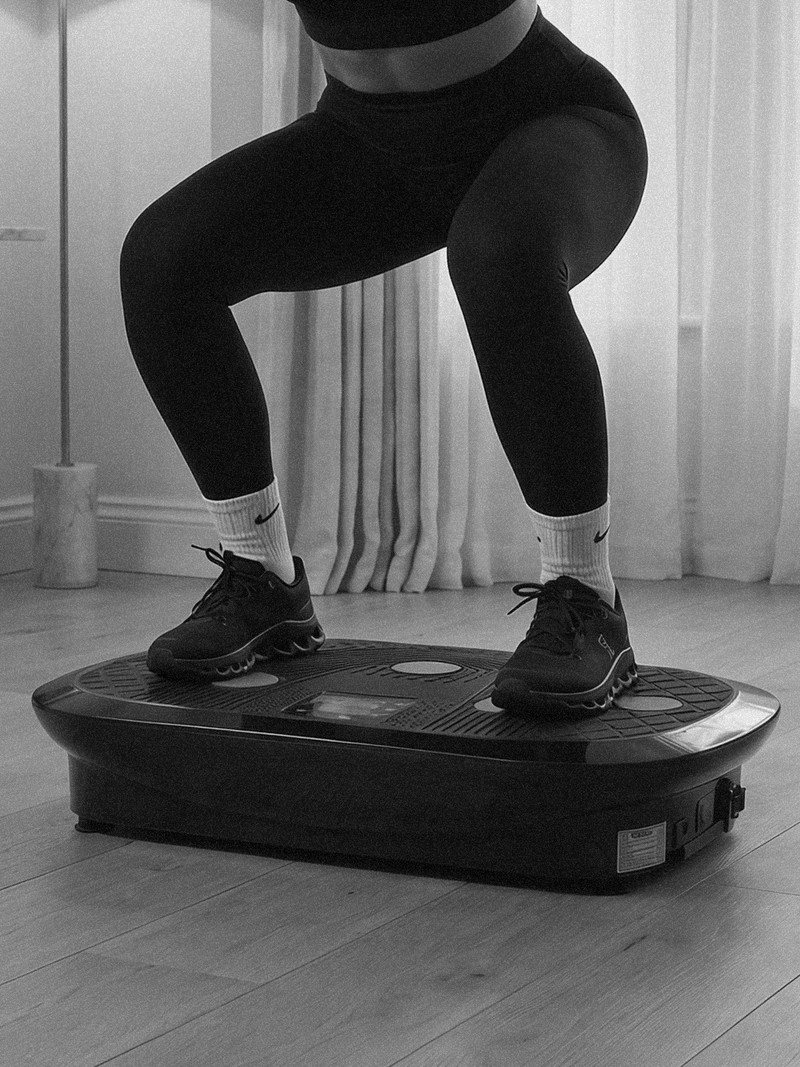
If you’re going to invest in one, know that simply standing on it and hoping for the best isn’t the point. Use it passively and you’ll still get some benefit but adding movement makes all the difference. “The key is not to just stand there,” says Laura. “Simple exercises like squats, lunges or balance work make it far more effective.” That said, it doesn’t need to feel complicated. Start with the basics: feet hip-width apart, knees slightly bent, core gently engaged. Even small movements – shifting your weight or holding a light squat – will make it more effective. As you get more comfortable, you can build from there. Slow squats, alternating lunges or single-leg balances all help increase muscle activation. “Controlled, intentional movements will give you far more benefit than passively standing still,” Laura adds. Phoebe also emphasises technique. “Bending the knees and engaging the core helps the body absorb the vibration properly,” she says. “That’s when you start to see more benefit.” In terms of timing, ten to 15 minutes is usually enough. It works well first thing in the morning, as a quick reset during the day, or as part of a warm-up or recovery routine. The key is consistency – keeping it realistic and easy to stick to.
The Bottom Line
Vibration plates won’t detox your body or kickstart fat loss on their own – but they can earn their place. Used well, they’re a simple, low-effort way to support how your body feels day to day, especially when time or energy is limited. Think of them less as a results-driven tool and more as a low-impact way to build small moments of movement into your day.
Visit FLOWPHYSIOLONDON.CO.UK, THENUTRIMETHOD.COM & LIEBLINGHEALTH.COM
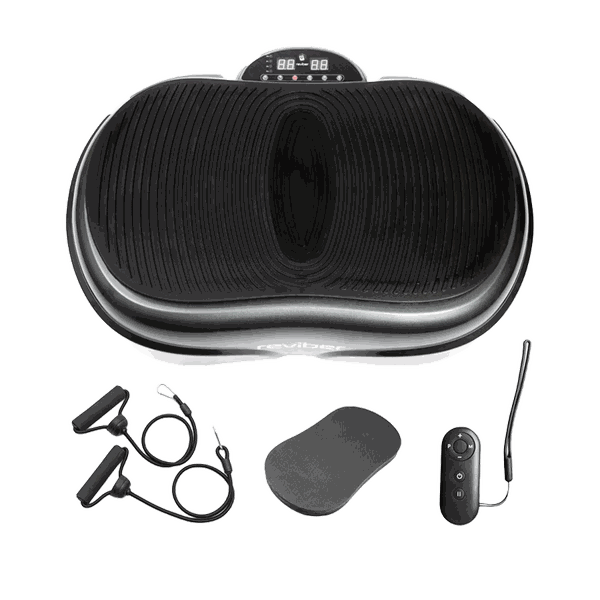
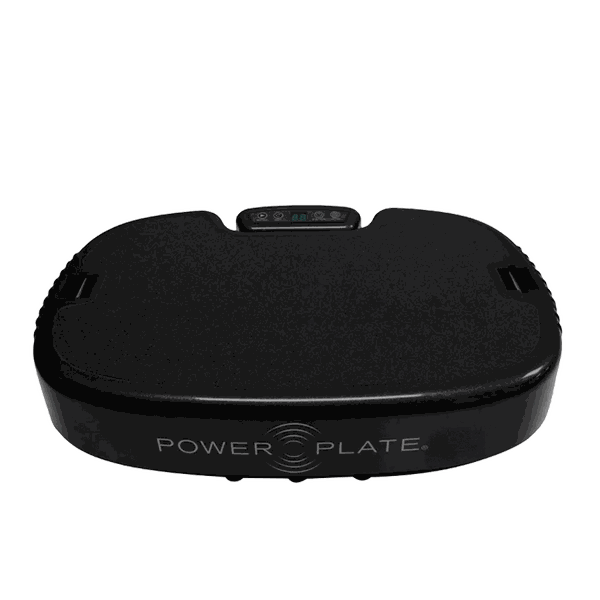
SHOP THE EDIT
DISCLAIMER: Features published by SheerLuxe are not intended to treat, diagnose, cure or prevent any disease. Always seek the advice of your GP or another qualified healthcare provider for any questions you have regarding a medical condition, and before undertaking any diet, exercise or other health-related programme.
Or continue to comment as a Guest below
DISCLAIMER: We endeavour to always credit the correct original source of every image we use. If you think a credit may be incorrect, please contact us at info@sheerluxe.com.
/https%3A%2F%2Fsheerluxe.com%2Fsites%2Fsheerluxe%2Ffiles%2Fwebsite-images%2F2025%2F03%2Fsign-up-pop-up.jpg)