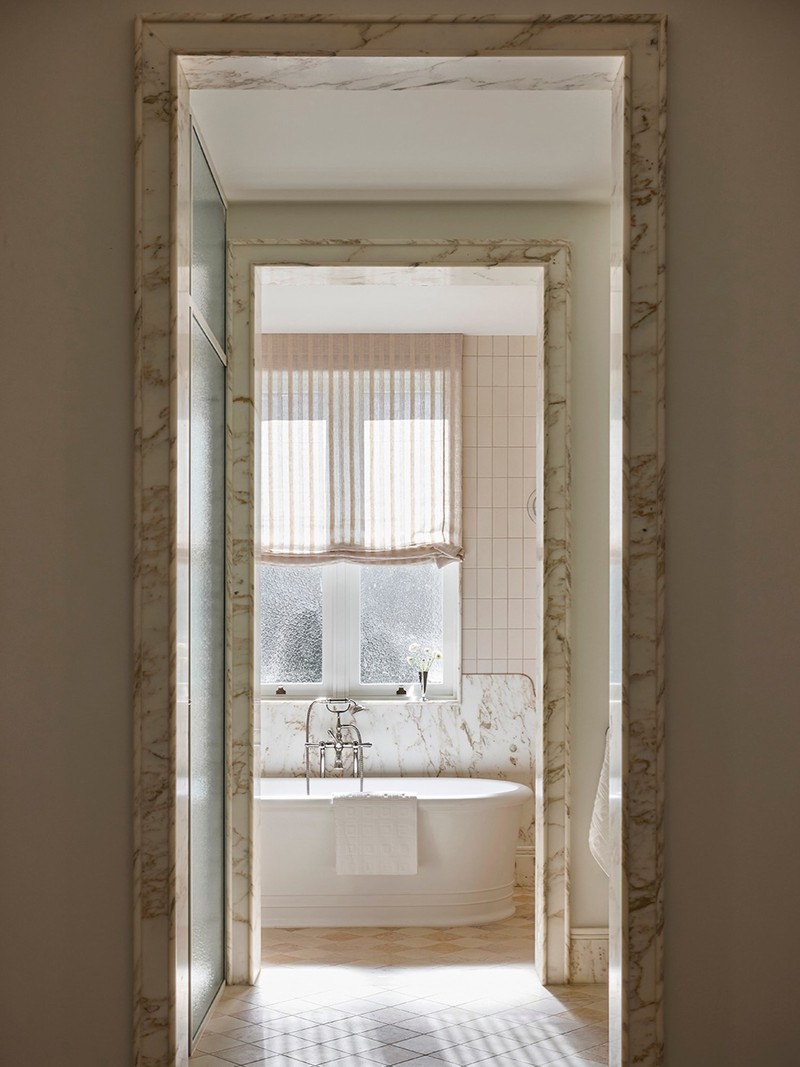
Interiors Trend Watch: Marble Architraves
Marble architraves feel both classic and contemporary – what’s driving this current resurgence?
While marble architraves have long been associated with traditional architecture, they were often used externally. More recently, they’ve been integrated into the internal architecture of a building, where they can elevate a space through structure and materiality.
There has been an evolution of the minimalist aesthetic too, with a greater focus now on tactility, subtle pattern and breadth of colour tones. Marble architraves present an opportunity to introduce these qualities into a space without overwhelming it.
What types of marble work best for architraves and how should they relate to other stone elements in the room?
Marble with more restrained veining and softer tones creates a calmer environment, while those with stronger contrasts and more pronounced veining introduce energy. Finishing is equally important. Honed marble lends the space a softer appearance, whereas polished finishes are more reflective and therefore engage the senses.
Materials within a room need to relate to one another. Not everything needs to match exactly but there should be a clear connection between surfaces, whether through tone, veining or finish. You could pick up a secondary tone from the architrave and reference it elsewhere, such as in a vanity or floor finish or vice versa. Because marble is a hard surface, it’s worth balancing it with softer elements such as textiles, lighting and accessories to ensure the space doesn’t feel stark.
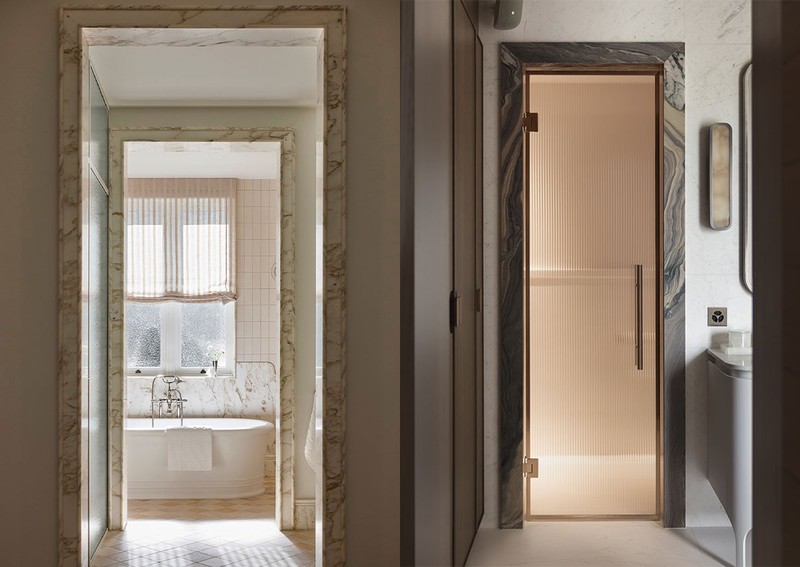
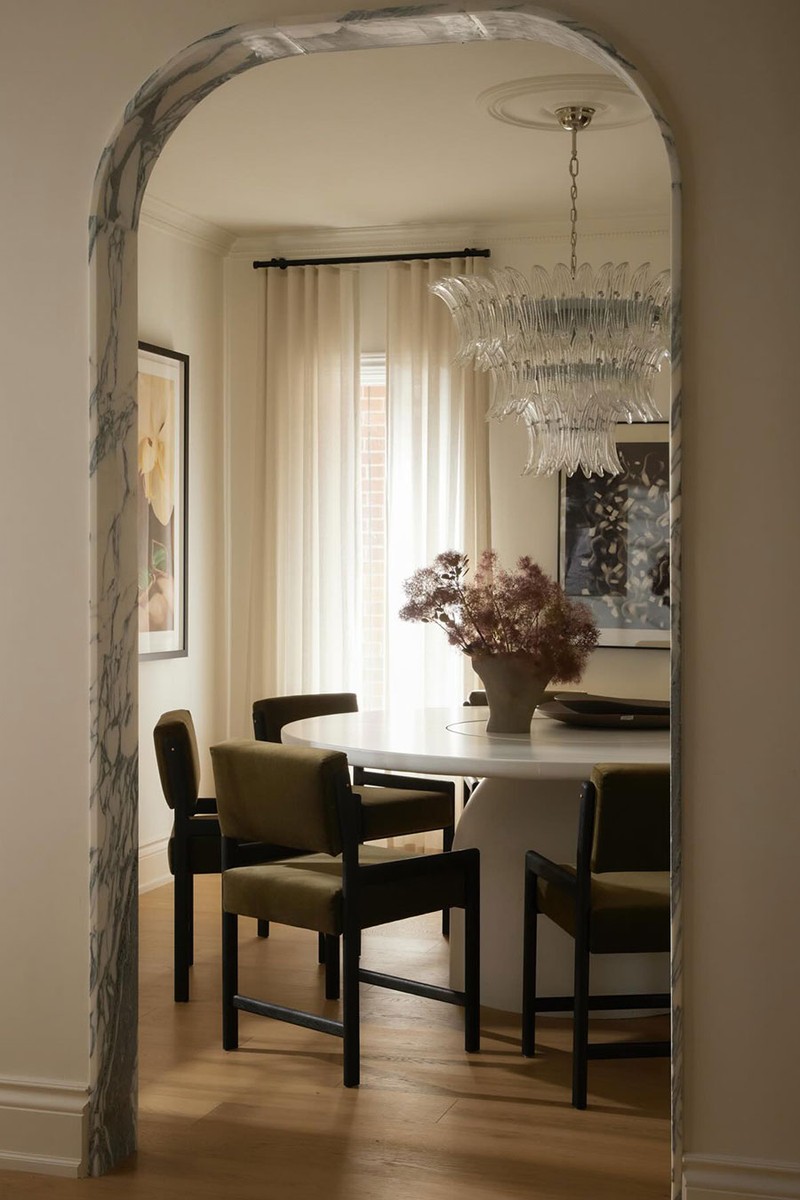
How does the feature elevate spaces like bathrooms compared to painted or timber alternatives?
Marble introduces a level of individuality that painted or timber architraves simply can’t replicate. Its natural veining ensures that no two installations are the same and therefore acts almost as a piece of architectural art within the room.
In bathrooms, where hard materials often dominate, marble architraves create a more cohesive scheme. They can either align with existing stone elements or provide contrast, depending on the slab selection. Softer marbles such as Carrara or Calacatta lend themselves to a calm, spa-like environment, while more saturated stones like Verde Guatemala or Rosso Levanto introduce contrast and definition.
Are they best suited to certain architectural styles or room types?
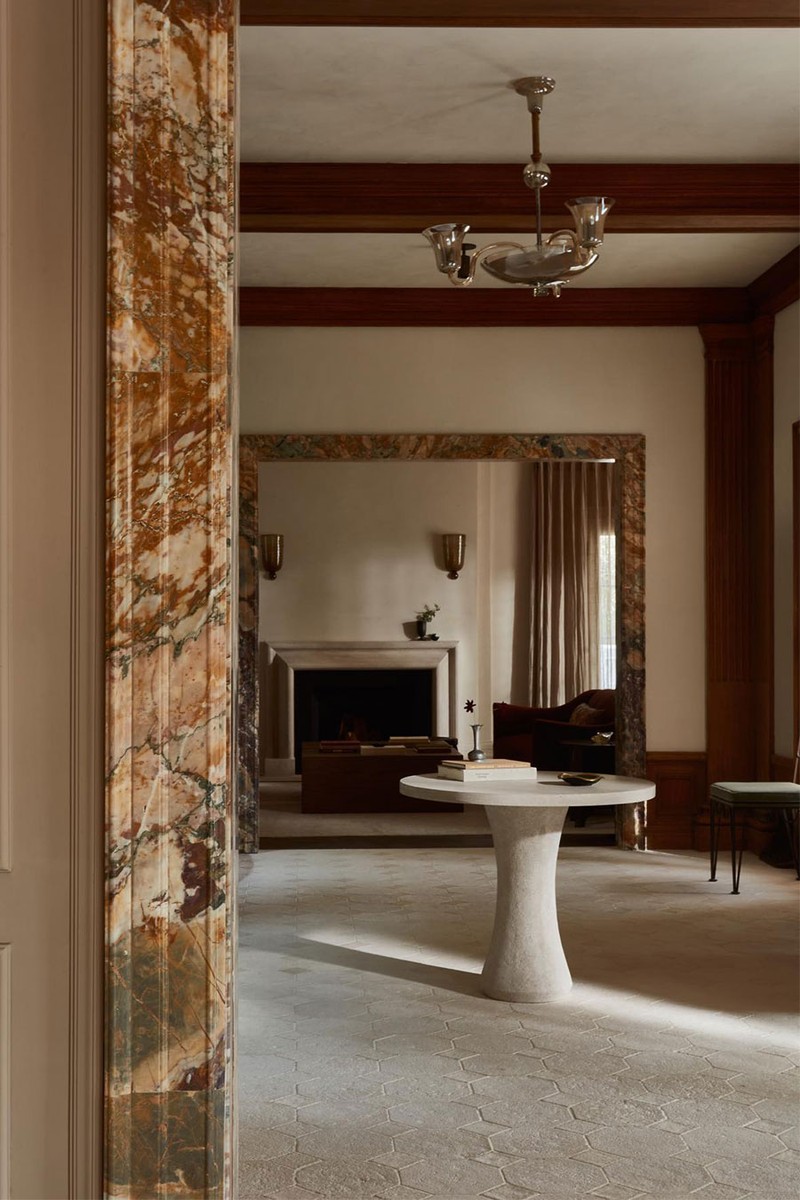
They can be used across a range of spaces, not just bathrooms, and are particularly effective for defining transitions, whether that’s framing a doorway, a larger opening or marking a threshold between zones.
In hallways, they can create a strong sense of cohesion between adjacent rooms, establishing a consistent architectural language throughout the house. In open-plan spaces, they help define areas without introducing physical divisions, so you maintain a sense of openness while still giving structure to the layout. For example, in larger bathrooms, they’re also useful for zoning showers, steam rooms or WCs, allowing for separation without interrupting the overall flow.
What practical considerations – cost, maintenance, installation – should you be aware of?
Marble architraves do require early planning. Costs will vary depending on the marble type and slab thickness, and it’s always best to use experienced stone specialists for fabrication and installation to achieve the best result.
Weight is an important consideration. Marble is significantly heavier than standard architrave materials, so walls and openings need to be properly prepared to support it. Marble is also porous and will need sealing to protect against staining, particularly in bathrooms. It’s relatively low maintenance once treated correctly, but it’s important to understand how the material will perform over time and factor that into the overall specification.
Visit PORTIAFOX.COM
Or continue to comment as a Guest below
DISCLAIMER: We endeavour to always credit the correct original source of every image we use. If you think a credit may be incorrect, please contact us at info@sheerluxe.com.
/https%3A%2F%2Fsheerluxe.com%2Fsites%2Fsheerluxe%2Ffiles%2Fwebsite-images%2F2025%2F03%2Fsign-up-pop-up.jpg)